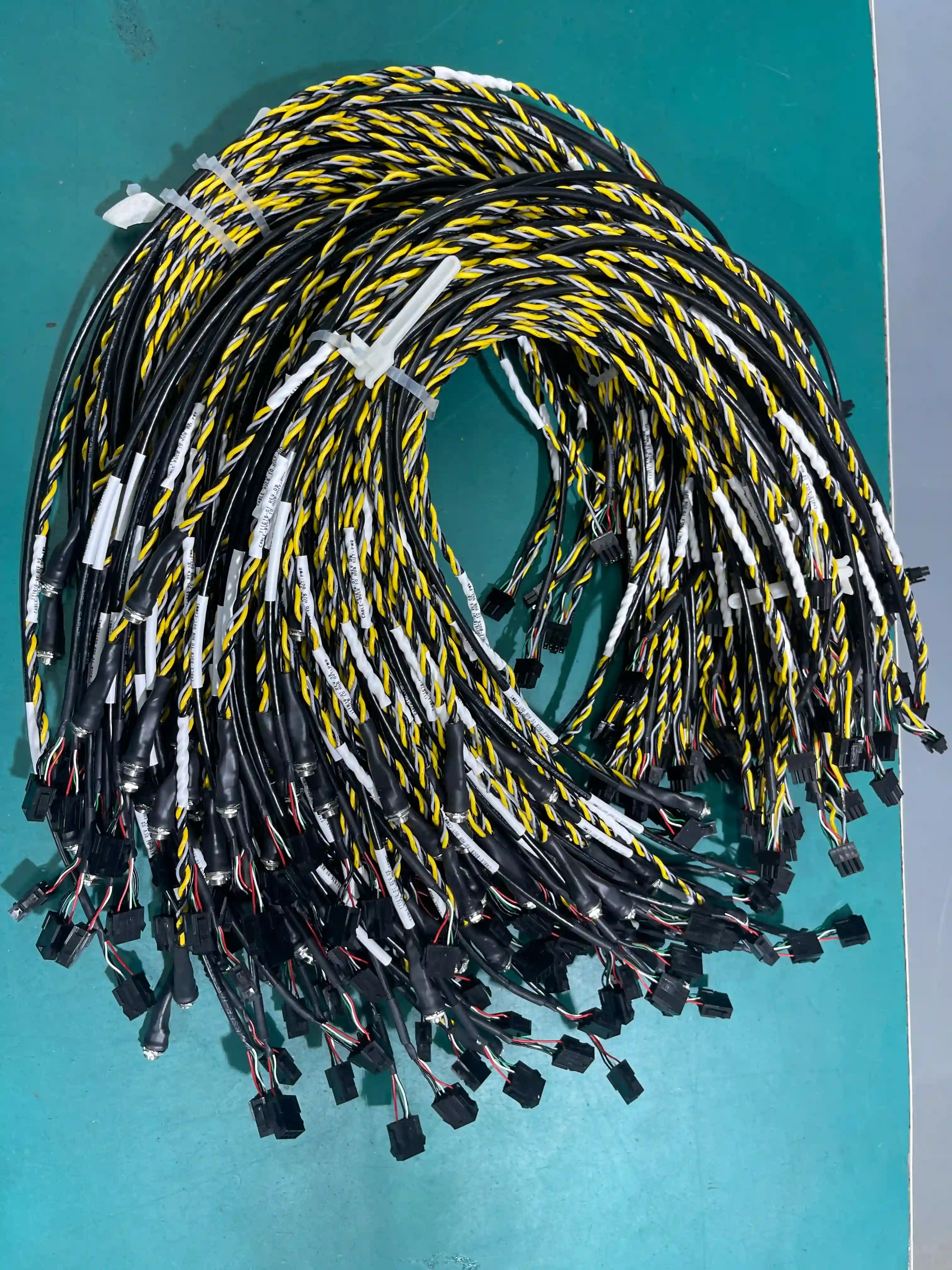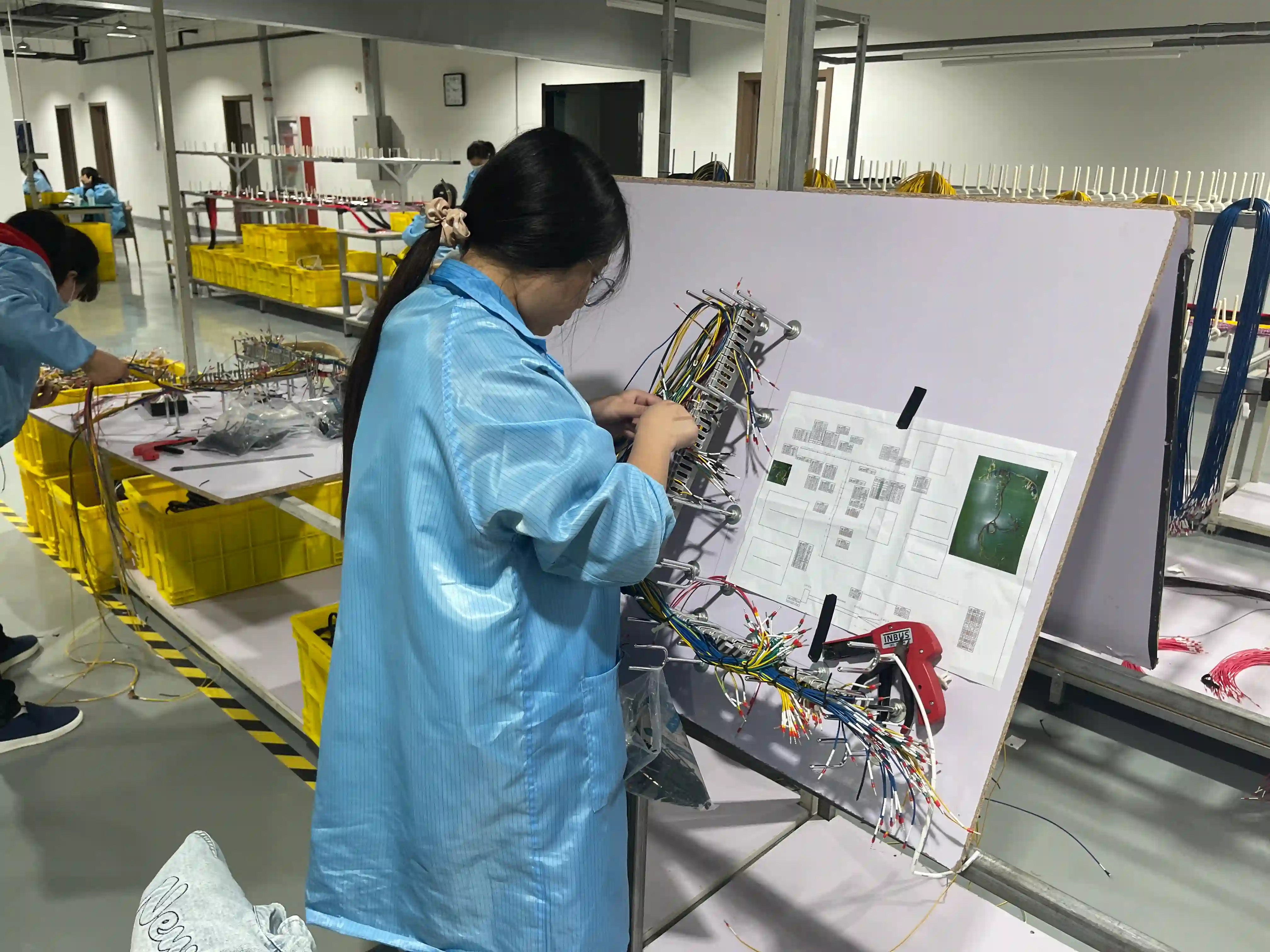
In a 2022-Q1 South African industrial equipment project, the customer had to move a wire harness from V2.0 to V2.1 revision transition while keeping a strict UL certification requirement. The change was not cosmetic: Harness 499 V2.0 adjusted to 1289 V2.1, with Custom label and end-treatment specifications that had to be confirmed before production could continue.
A UL-certified wire harness change should be released through drawing revision control, material traceability, label approval, end-treatment verification, and final electrical testing. If the factory treats the update as a verbal instruction, the buyer may receive two different harness versions under one part number.
TL;DR: UL-certified harness revisions need controlled evidence
- Freeze the active revision before cutting wire; V2.0 and V2.1 cannot share undocumented production lots.
- Confirm UL-758 wire, approved components, label content, and end treatments before the first article release.
- Use IPC-A-620 workmanship checks and IATF 16949-style change control for disciplined production handoff.
- Ask for FAI photos, BOM evidence, continuity records, and revision-labeled packaging before shipment.
A UL-certified wire harness is a harness built with materials, ratings, markings, and records that support a required UL safety file or customer compliance package. A revision control system is a document discipline that identifies which drawing, BOM, label, and work instruction are active for a production lot. An end treatment is a termination-side finish that defines how a wire end is stripped, crimped, ferruled, sleeved, booted, tinned, or heat-shrink protected.
This guide is written for industrial equipment engineers, electrical buyers, quality managers, and supplier-development teams who already have an approved harness but need to release a change without losing compliance evidence. The role behind the article is a senior factory engineer with more than 20 years in wire harness and cable assembly production. The objective is practical: show exactly what must be checked when a UL-certified harness changes revision during an urgent schedule.
— Hommer Zhao, Grundlegger & CEO: When a harness moves from V2.0 to V2.1, I do not let production rely on memory. The active drawing, label text, end treatment, and UL material evidence must match before the first wire is cut.
Why revision changes create risk in certified harness builds
A mid-production revision can change more than the visible routing. It may change wire color, cut length, connector cavity assignment, label text, sleeve position, stripped length, terminal type, heat-shrink length, ferrule choice, packaging label, or inspection method. Each detail can affect compliance, fit, service replacement, or electrical safety.
The South African case shows the buying-stage problem clearly. The customer did not only ask for a new quote. They needed Harness 499 V2.0 adjusted to 1289 V2.1 while also enforcing a UL certification requirement. That means the supplier had to keep the old and new records separated, confirm the new label and end treatment, and source verified UL-certified wire and components without delaying the urgent build.
The weak instruction is "update to the latest drawing." The concrete substitution is: "release 1289 V2.1 only after engineering confirms the redlined changes, approved UL wire styles, connector BOM, label content, end-treatment detail, inspection plan, and packaging revision mark." That sentence gives production, quality, and purchasing the same target.
Standards that support the control plan
UL-758 through UL is the key reference when appliance wiring material, insulation rating, temperature class, voltage rating, traceability, or safety-file evidence matters. The practical factory point is simple: if the drawing or customer specification calls for UL-recognized wire, purchasing cannot substitute a cheaper wire family unless engineering and the customer approve it.
IPC-A-620 through IPC gives common workmanship language for wire preparation, crimping, soldered wire connections where allowed, insulation support, conductor damage, sleeve placement, marking, and final assembly acceptance. It helps the buyer define what a good harness looks like, but it does not replace the customer drawing.
IATF 16949 is useful even outside automotive when the team needs disciplined change control, traceability, containment, and supplier communication. ISO 9001 supports document control, purchasing control, nonconforming output control, and record retention. Together, these references help the factory prove that V2.1 was built intentionally, not accidentally mixed with V2.0.
— Hommer Zhao, Grundlegger & CEO: UL-758 helps us control the wire and insulation evidence; IPC-A-620 helps us control workmanship. Neither standard excuses an unclear label note or missing revision mark.
Comparison table: what changes between V2.0 and V2.1 must control
| Change area | What to confirm | Factory control point | Risk if missed | Release evidence |
|---|---|---|---|---|
| Drawing revision | Active part number, revision, redline, and effective PO | Document-control check before work order release | V2.0 and V2.1 mixed in one shipment | Approved drawing and revision-stamped traveler |
| UL materials | Wire style, rating, color, gauge, component approval, and lot | Incoming inspection against BOM | Certified harness contains unapproved material | Material certificates and lot record |
| Custom labels | Text, language, revision, location, orientation, and durability need | Label proof approval and first-piece inspection | Service team installs the wrong harness version | Label artwork, sample photo, and inspection sheet |
| End treatments | Terminal, ferrule, stripped end, boot, sleeve, heat shrink, or tinning note | Work-instruction update and operator signoff | Harness fits the drawing electrically but fails installation | FAI photos and terminal/end-treatment checklist |
| Test fixture | Pinout, cavity map, continuity points, shorts check, and label scan if used | Fixture revision review before final test | Old fixture passes a new harness incorrectly | 100% electrical test record by revision |
| Packaging | Bag label, carton label, part number, revision, quantity, and trace lot | Pack-out verification before shipment | Receiving team books V2.1 stock as V2.0 | Packing photos and shipment checklist |
The table turns a revision change into inspectable work. It also prevents a common argument: engineering assumes the drawing controls the change, purchasing assumes the BOM controls it, production assumes the traveler controls it, and receiving only sees a carton label. A certified harness change needs all four to agree.
Label and end-treatment details that deserve first-article review
Custom label changes look small, but they often carry the version identity that technicians use during installation or service. A label should state the part number, revision if required, lot or date code, orientation, readable side, and any customer-specific text. If a label wraps around a small branch, confirm the overlap does not hide the useful information.
End treatments deserve the same attention. A V2.1 change can move from a stripped lead to a ferrule, from a straight terminal to a flag terminal, from bare insulation support to heat shrink, or from a loose boot to a seated boot. For related workmanship checks, NorKab's crimp pull test guide explains why terminal strength must be verified with numbers instead of appearance alone.
If the revision changes wire length or branch routing, the harness board and fixture may need updates too. NorKab's wire harness board layout guide covers fixture pin positions, branch support, and layout controls. For compliance traceability, the traceability and labeling guide shows how lot records prevent mixed-version shipments.
Case process: how V2.1 was released without schedule loss
In the South African industrial case, the engineering team first separated the revision question from the schedule question. The customer needed the update urgently, but the factory still had to confirm the active V2.1 drawing, label text, and end-treatment specification before production release. This prevented operators from building a hybrid harness from the old and new instructions.
Next came material verification. Purchasing sourced and verified UL-certified wire and components against the updated requirement instead of relying on old stock assumptions. Quality then tied the first-article inspection to the V2.1 record: label content, end treatment, wire material, connector placement, and final electrical test had to agree with the new release.
The result was a clean transition: V2.0 to V2.1 revision transition, UL certification requirement, and Custom label and end-treatment specifications stayed visible in the production record. That is the lesson for buyers: urgent schedule pressure can be handled, but only when the supplier makes the change evidence explicit.
— Hommer Zhao, Grundlegger & CEO: The fastest revision change is not the one with the fewest checks. It is the one where engineering, purchasing, production, and final test all work from the same V2.1 evidence package.
Buyer checklist before approving a UL-certified harness change
Before approving a revised harness, ask the supplier for a short evidence pack. It should include the active drawing revision, BOM with UL material callouts, material certificates or trace records, label artwork proof, first-article photos, end-treatment photos, test record, and packaging label. For urgent production, this package matters more than a long email thread.
Use a release sequence that is hard to misunderstand: engineering review, material confirmation, label proof, first article, pilot quantity, production lot, pack-out check. If the revision affects connector seating or secondary locks, add terminal-retention evidence. NorKab's terminal retention guide explains this release gate in more depth.
For industrial equipment builds, also connect the revision plan to the equipment assembly line. Tell the supplier whether V2.0 stock is still usable, whether V2.1 must replace all future shipments, and whether mixed inventory is allowed during service. If the answer is no, require revision-coded packaging and receiving labels.
Evolve: replace vague change notes with production-ready wording
The weakest section in many harness change requests is the note field. A vague note says, "Update harness to new revision and keep UL compliance." That is not enough for a production floor. A stronger note says, "Build Harness 1289 V2.1 only. Confirm UL-certified wire and components against the V2.1 BOM, update custom label text and location, verify end-treatment specifications, complete first-article photos, perform 100% continuity and shorts testing, and mark inner bag and carton labels with V2.1 revision."
That wording is longer because the risk is real. It tells the buyer what they approved, tells the supplier what cannot be substituted, tells inspection what to document, and tells receiving which version arrived.
FAQ
Q: What records should come with a UL-certified wire harness revision?
Request the active drawing revision, BOM, UL material evidence, label proof, first-article photos, end-treatment photos, and 100% electrical test record. For a V2.0 to V2.1 change, the pack should clearly show which PO and shipment quantity were built to V2.1.
Q: Can a supplier use old V2.0 material for a V2.1 harness?
Only if engineering confirms the material is unchanged and still matches the V2.1 BOM, UL-758 requirement, wire gauge, color, insulation rating, and connector specification. If label content or end treatment changed, old WIP should be contained until quality releases it against the new revision.
Q: Why do label changes matter on an industrial wire harness?
Labels often carry part number, revision, lot, installation direction, and service identity. One wrong label can make a correct harness look obsolete or make V2.0 stock appear to be V2.1. Approve label text, position, orientation, and packaging marks before production.
Q: Which standards should be named in the RFQ?
Use UL-758 for wiring-material evidence where the product requires UL-recognized wire, IPC-A-620 for harness workmanship, and ISO 9001 or IATF 16949 language for document control and change control. The drawing still needs the exact revision, BOM, and label requirements.
Q: Does a harness revision require a new test fixture?
It depends on the change. If V2.1 changes pinout, cavity assignment, branch length, connector type, or label scanning, the test fixture or test program must be reviewed. At minimum, require a first-piece test and 100% continuity and shorts testing for the released revision.
Q: How should V2.0 and V2.1 inventory be separated?
Separate inventory by physical location, traveler, bag label, carton label, and ERP or receiving code. If both revisions can ship, define the allowed quantity by PO. If V2.0 is obsolete, quarantine remaining WIP and ship only V2.1-marked harnesses.
Need help releasing a certified harness revision?
NorKab can review your V2.0 to V2.1 drawing change, UL material requirements, label artwork, end-treatment details, fixture checks, and shipment labeling before production. Contact NorKab with your active drawing, redline, BOM, target schedule, and certification notes so our engineering team can build a controlled release plan.