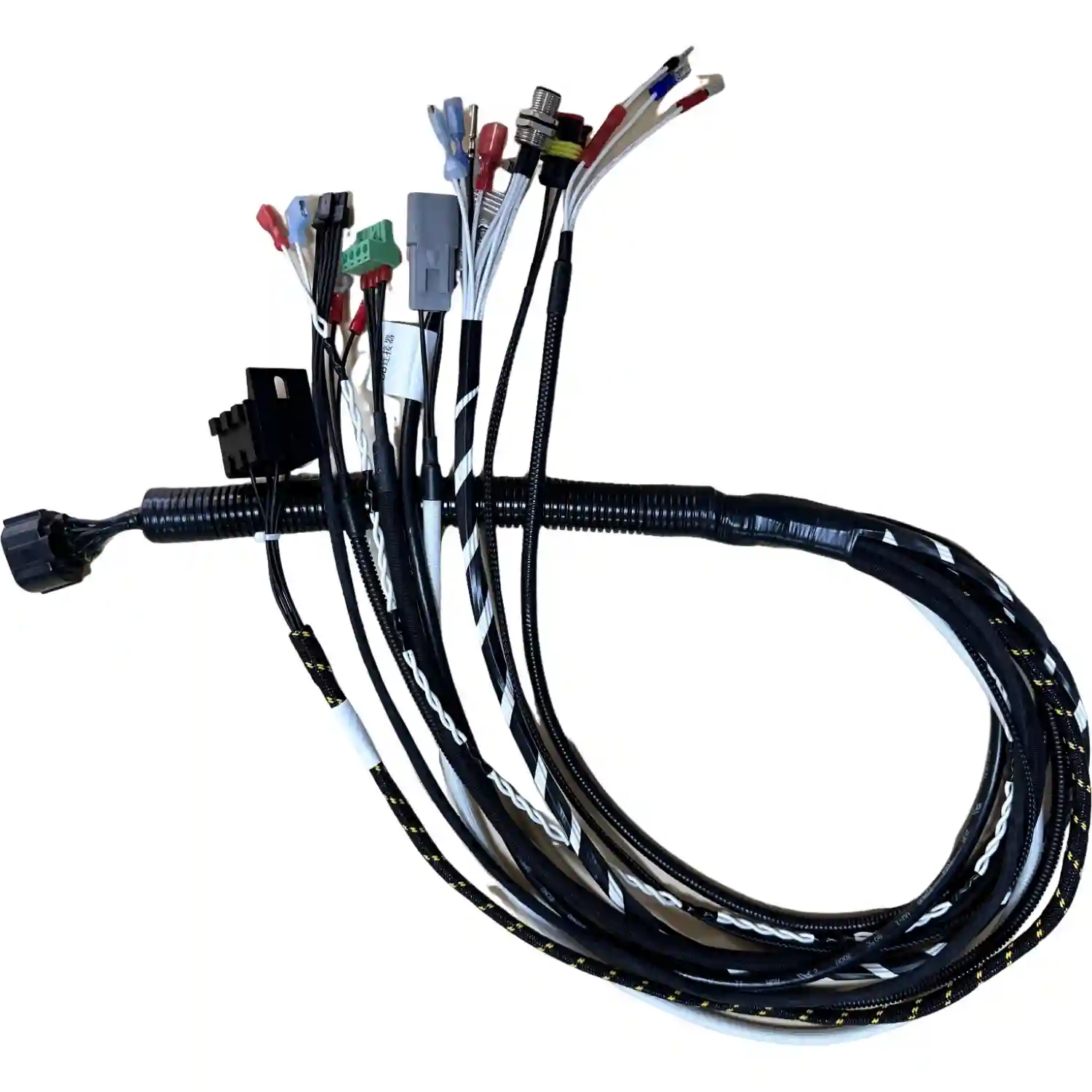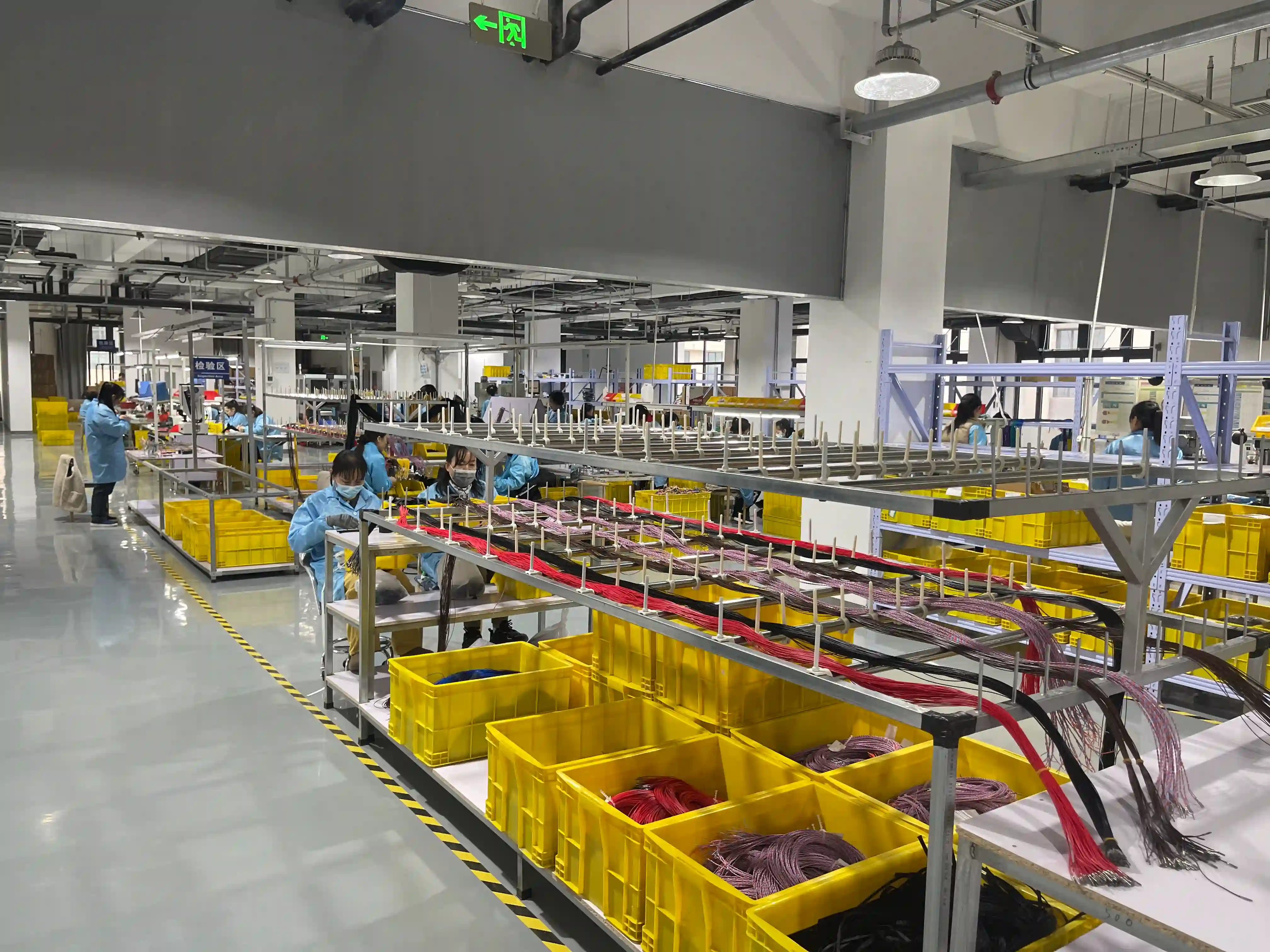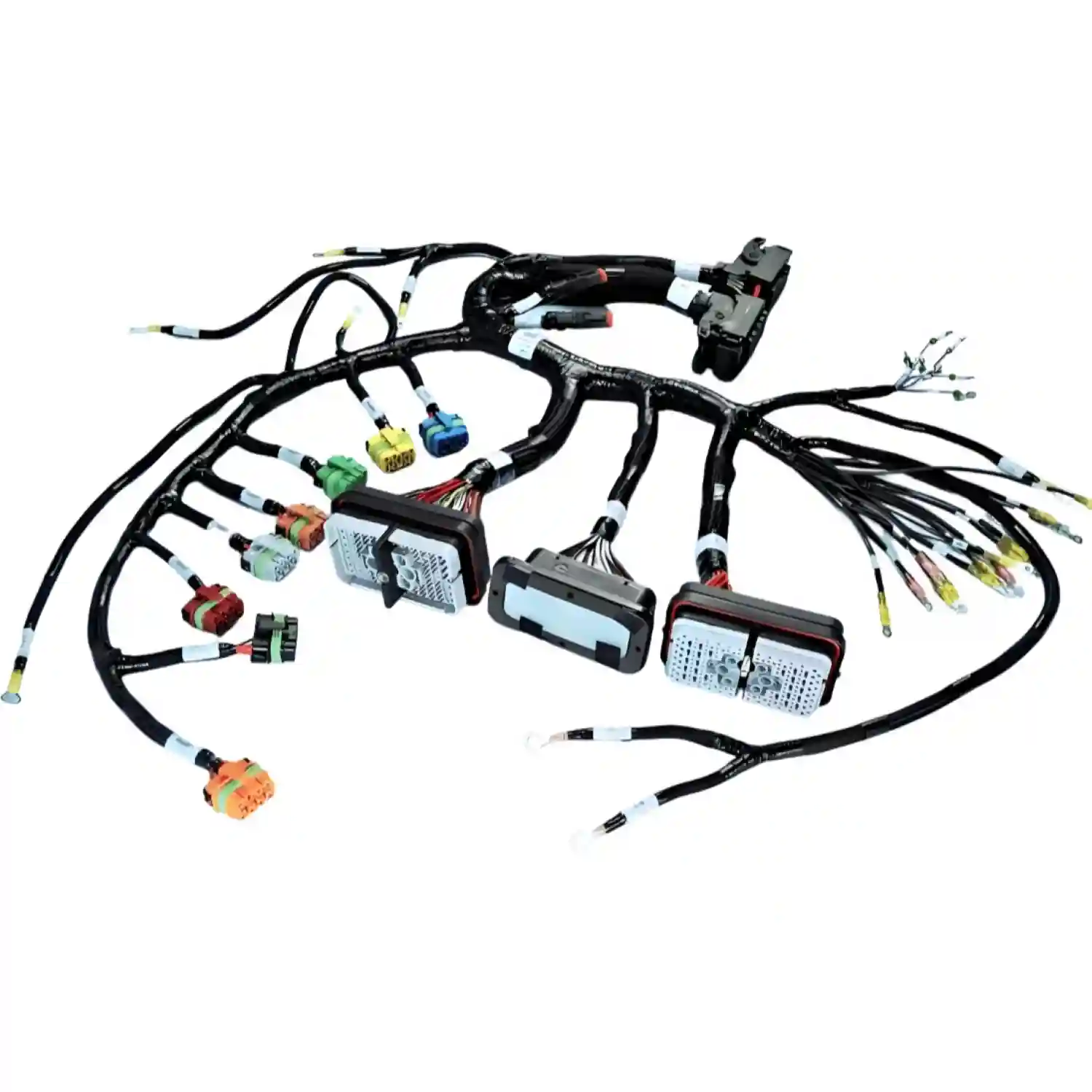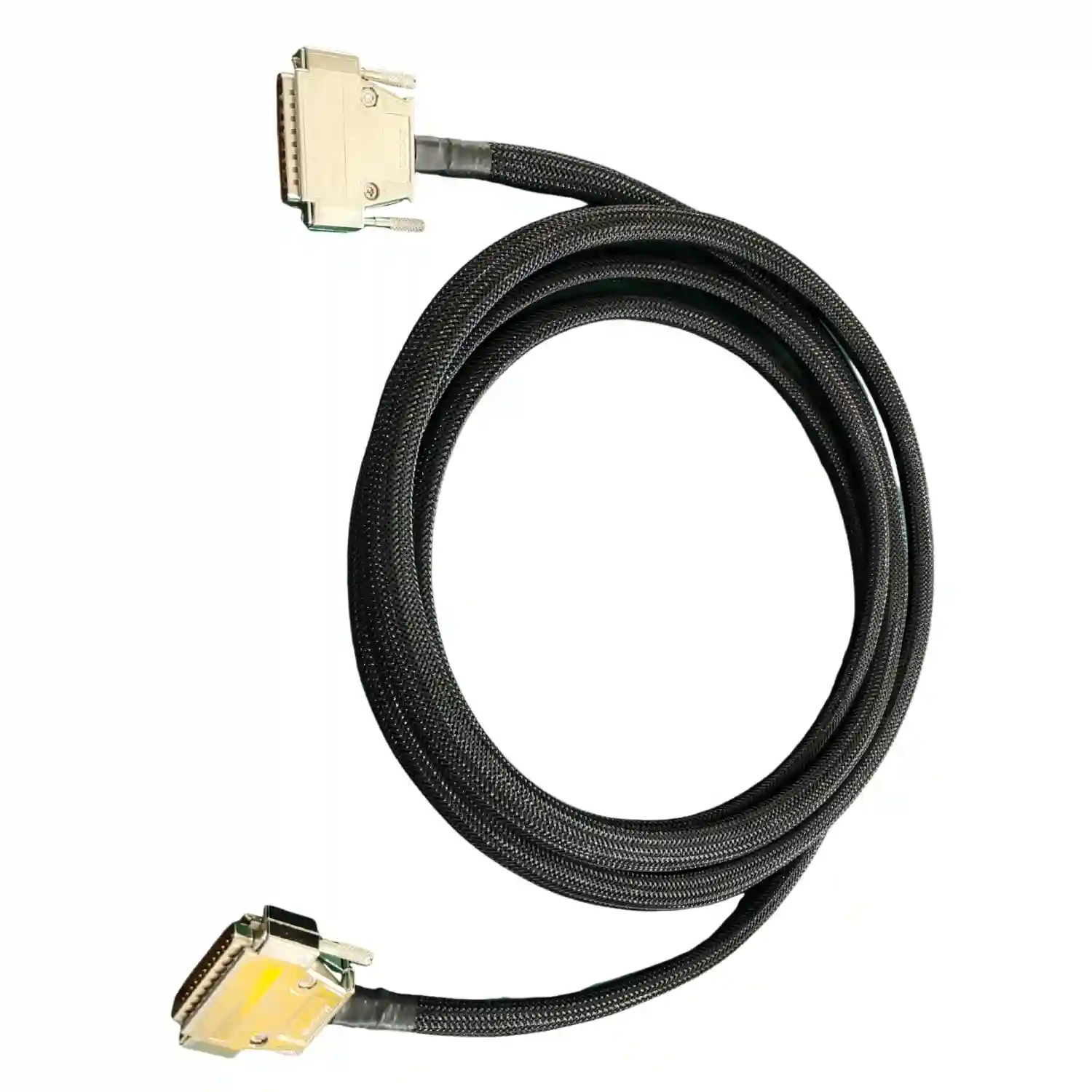
A South African industrial machinery integrator needed high-volume harness assemblies built around a Bulgin PM Loom connector, but South China lockdowns and connector shortages pushed the program into a delivery crisis. The buyer was working in 100-200 piece order ranges, considered moving harness work in-house, and needed split-delivery execution before their equipment schedule lost more time.
TL;DR: connector shortage mitigation must protect the approved harness design
- Connector shortages should trigger a controlled material plan, not silent part substitution.
- Split delivery works when the buyer can install partial harness quantities without changing the BOM.
- IPC-A-620, UL-758 and IATF 16949 give useful language for workmanship, material control and change approval.
- Any alternate connector needs a fit, pinout, seal, retention and electrical-test review before release.
A connector shortage is a supply constraint where the approved connector part number cannot support the required build schedule. Split delivery is a controlled shipment plan that releases confirmed harness quantities first while the remaining connector stock is still being sourced. An approved alternate connector is a replacement part that has passed drawing, mating, electrical, sealing and production checks before shipment.
This guide is written for sourcing managers, industrial engineers and NPI buyers who already have a harness drawing, a frozen connector family, and a production schedule under pressure. The role behind the article is a senior factory engineer with more than 20 years in wire harness and cable assembly production for industrial, automotive, medical and robotics customers. The objective is practical: keep equipment builds moving without turning a connector shortage into an uncontrolled engineering change.
— Hommer Zhao, Grundlegger & CEO: If a 100-200 piece harness order is blocked by one connector, I separate the problem into approved stock, recoverable schedule, and engineering-change risk. Discounting does not solve a missing connector.
Why connector shortages break wire harness builds
Connector shortages break harness builds because the connector defines more than the mating interface. A connector controls cavity layout, terminal family, seal size, wire OD window, keying, mounting geometry, label position, test fixture contact points and packaging protection. Changing it late can force a new crimp setup, a new harness board position, a new continuity fixture and a new customer fit check.
The South African industrial machinery case showed the real failure mode. The harness was not blocked by copper wire, sleeve or labels; it was blocked by the specific Bulgin PM Loom connector. That detail matters because Bulgin circular and industrial connectors are often chosen for environmental sealing and panel-interface requirements. A supplier cannot replace that interface with a generic connector and pretend the harness is unchanged.
The weak response is “we will find an equivalent connector.” The concrete response is: “we will ship confirmed approved-connector stock first, isolate the remaining shortage, propose any alternate as engineering-approval-required, and keep IPC-A-620 workmanship, UL-758 material traceability, and the customer pinout test unchanged.” That wording keeps schedule pressure from corrupting the product record.
Case: split delivery during a Bulgin connector shortage
In 2022-Q1 to 2022-Q2, a South African industrial machinery integrator needed harnesses with a Bulgin PM Loom connector while regional lockdowns in South China made connector supply unstable. The customer considered reshoring the harness build in-house because the equipment line needed visible progress. Our team could not create connector stock by promise, so we changed the execution model.
The factory separated available stock from open stock, built the confirmed harness quantity first, and used split-delivery execution to ship usable assemblies while the remaining connector balance was still being secured. For the buyer, that meant the production line received partial harness quantities instead of waiting for the full order to clear at once. For the factory, it meant the approved connector and terminal system stayed locked.
The result was not a perfect supply chain story; it was a controlled recovery. The customer received phased deliveries, avoided a complete line stop, and kept the manufacturing contract outside their own plant. That is the main lesson: when a connector is constrained, the supplier should expose the constraint early, protect the design baseline, and give the buyer a shipment plan they can schedule against.
— Hommer Zhao, Grundlegger & CEO: Split delivery only works when the first shipment is production-usable. I do not like partial shipments that create two undocumented revisions of the same harness.
Comparison table: four shortage responses
| Shortage response | Best use case | Factory control point | Main risk | Release evidence |
|---|---|---|---|---|
| Split delivery with approved connector | Some original connector stock exists and the buyer can consume partial quantity | Separate available stock, WIP and open balance by lot | Buyer assumes the full order is solved | Shipment plan, lot list and 100% continuity test |
| Approved alternate connector | Original connector lead time is longer than the equipment schedule | Fit, pinout, terminal, seal and fixture review | Alternate mates poorly or changes installation | Customer approval, FAI photos and test report |
| Safety stock agreement | Repeat harness demand with predictable monthly usage | Min/max stock and aging review | Inventory cost moves into hidden margin | Stock report and revision control |
| Harness redesign | Connector family is obsolete or repeatedly constrained | Drawing revision, harness board update and test fixture update | Schedule improves but validation restarts | New drawing, sample approval and ECO record |
| In-house emergency build | Buyer has approved tooling, trained operators and test fixtures | Transfer of crimp data, fixtures and inspection criteria | Labor starts before quality system is ready | Process traveler and acceptance record |
The table shows why “find another connector” is not a complete plan. Split delivery protects the approved design, but it only buys time. Alternate connectors can work, but only after the factory proves mating, terminal retention, sealing and test coverage. Redesign gives the buyer long-term control, but it can reset qualification.
Standards that keep shortage decisions controlled
IPC-A-620 through IPC is useful because it gives shared workmanship language for cable and wire harness assemblies. During a shortage, IPC-A-620 helps the buyer say which crimp, strip, insulation, terminal and assembly workmanship evidence must stay unchanged. It does not approve an alternate connector by itself.
UL-758 through UL matters when appliance wiring material, voltage rating, insulation system or traceable wire style is part of the approved design. A connector shortage should not create an unreviewed wire or insulation change. If the alternate connector requires a different seal or terminal barrel, confirm the wire OD and insulation still fit the approved window.
IATF 16949 gives useful discipline for change control, containment and supplier communication even when the product is industrial rather than automotive. ISO 9001 supports document control and purchasing records. For the connector family itself, use the approved manufacturer datasheet and a stable public electrical connector reference to verify series, environmental intent and mating style.
How to approve an alternate connector without creating a new failure
An alternate connector should be approved as a controlled engineering change, not as a purchasing substitution. Start with mating compatibility: shell size, keying, locking method, pin count, contact gender and panel interface must match the equipment. Then check the wire side: terminal family, crimp barrel range, seal cavity, rear grommet, backshell and strain relief must fit the harness construction.
Next, update production evidence. A different connector can move the crimp height setting, pull-test requirement, terminal insertion feel, secondary lock operation and test fixture contact point. For a related production-control view, NorKab's terminal retention and secondary locking guide explains why a strong crimp can still fail if the terminal is not seated correctly.
For sealed industrial harnesses, do not treat IP rating as a label. The wire OD, cavity plug, seal compression and connector backshell have to match the actual wire bundle. NorKab's sealed connector guide covers the wire OD and cavity-plug checks that should be repeated before any alternate connector ships.
What a useful split-delivery plan includes
A useful split-delivery plan tells the buyer what can ship, what cannot ship, and what decision is needed next. For a 100-200 piece order range, the plan should state approved connector stock on hand, confirmed build quantity, remaining connector ETA, partial shipment date, final shipment risk, and whether any alternate needs engineering approval. Without those six items, the buyer cannot schedule equipment assembly.
The plan should also protect traceability. Separate the first shipment from the later shipment by connector lot, test date, operator, harness revision and packing list. If the customer later finds a field issue, the factory can isolate whether the issue belongs to the first connector lot, the second connector lot, or a downstream installation step.
NorKab handles this kind of release work through custom wire harness assembly, crimping process control, and cable and harness testing. For programs with frequent change pressure, the drawing package should also point to wire harness kitting and material control so purchasing, production and inspection use the same revision.
RFQ checklist for shortage-resistant harness sourcing
A shortage-resistant RFQ names the approved connector and the rules for changing it. Include manufacturer, series, exact part number, terminal part number, seal or cavity-plug part number, wire gauge, insulation OD, harness revision, annual volume, first order quantity and required delivery window. Add photos only as support; do not let photos replace part numbers.
Ask the supplier these questions before placing the order:
- Which connector stock is physically available, and which stock is still open?
- Can you support split delivery without changing the approved connector?
- What alternate connector would you propose if the original part does not recover?
- Which crimp height, pull test, terminal insertion and continuity test records will change with an alternate?
- Will any seal, cavity plug, backshell, label or fixture dimension change?
- What written approval is required before the alternate ships?
The strongest sourcing teams ask these questions before the shortage hits. If the connector is a single-source part, consider a second-source review during design release. If the product uses a special sealed interface, keep safety stock or approve a second connector family while the schedule is still calm.
— Hommer Zhao, Grundlegger & CEO: A connector shortage is a material problem until someone ships an unapproved alternate. Then it becomes a quality problem, a drawing problem and a customer-trust problem.
When split delivery is not enough
Split delivery is not enough when the buyer needs every harness at the same installation event, when the first partial quantity cannot be used alone, or when the missing connector affects safety-critical release. In those cases, the factory should say so early. A partial shipment that sits unused at the buyer's warehouse does not reduce schedule risk.
Split delivery also fails when the two shipments drift into different revisions. If shipment one uses the original connector and shipment two uses an alternate connector, the buyer now has two harness configurations. That may be acceptable, but only if labels, drawings, service instructions and spare-part records separate the two versions clearly.
For long-term risk, redesign may be better than repeated emergency purchasing. A connector with recurring lead-time instability should be reviewed during the next engineering change cycle. The goal is not to avoid every shortage; it is to make sure the next shortage has a controlled response instead of a production surprise.
References
- IPC overview, including IPC standards context
- UL safety organization overview
- IATF 16949 quality management overview
- ISO 9000 quality management overview
- Electrical connector overview
FAQ
Q: What should we do first when a wire harness connector is out of stock?
Freeze the approved harness revision, separate available connector stock from open stock, and ask for a split-delivery plan. For a 100-200 piece order range, the supplier should state confirmed build quantity, remaining connector ETA and whether any alternate needs written approval.
Q: Can a supplier use an equivalent connector during a shortage?
Only after engineering approval. The alternate must match mating interface, pin count, keying, terminal range, seal system, wire OD window and test-fixture access. IPC-A-620 workmanship language does not automatically approve a connector substitution.
Q: Which standards should appear in a shortage-control plan?
Use IPC-A-620 for wire harness workmanship, UL-758 when wiring material ratings or insulation traceability matter, ISO 9001 for document control, and IATF 16949-style change control when the customer requires formal containment and approval records.
Q: When is split delivery better than redesign?
Split delivery is better when some approved connector stock exists and the buyer can use the first shipment immediately. Redesign is better when the connector is obsolete, repeatedly constrained, or likely to block more than one production cycle.
Q: What records should come with a partial harness shipment?
Each partial shipment should include harness revision, connector lot, operator or line record, test date, 100% continuity result, packing list and remaining balance. Those records keep the first shipment and final shipment traceable if a field issue appears.
Q: How can buyers reduce connector-shortage risk before launch?
Approve second-source connectors during design release, keep min/max stock for repeat builds, define written change-approval rules, and ask suppliers to flag single-source parts before the first 100-piece or 200-piece harness order is placed.
Need help recovering a connector-constrained harness build?
NorKab can review connector availability, alternate part risk, crimp tooling, terminal retention, sealed-cavity fit, harness test coverage and split-delivery options before your equipment schedule stalls. Contact NorKab with your harness drawing, approved connector list, current shortage status and target delivery date, and our team will map a controlled recovery plan.