TL;DR: Kevlar-reinforced probe cables skal specificeres som mekanisk system, ikke kun kabeltype
- Kevlar reinforcement helps when pull load, flexing, abrasion or probe handling damages normal cable jackets.
- RFQ'en skal låse reinforcement layer, jacket, OD, bend radius, strain relief and electrical test.
- IPC-A-620, UL-758 and ISO 9001 give useful release language, but tensile limits must be project-specific.
- Prototype price can be reduced by alternate raw-material sourcing if the Kevlar layer and test plan stay locked.
A Canadian specialty equipment OEM needed a new Kevlar-reinforced probe cable but found the initial quotation too high for their project budget. The case was not a generic price negotiation: the buyer needed a 10-box prototype order, a 100-box bulk order plan, and a locked Kevlar reinforcement layer, while comparing the quote against lower-cost alternatives and warning that the project might move elsewhere.
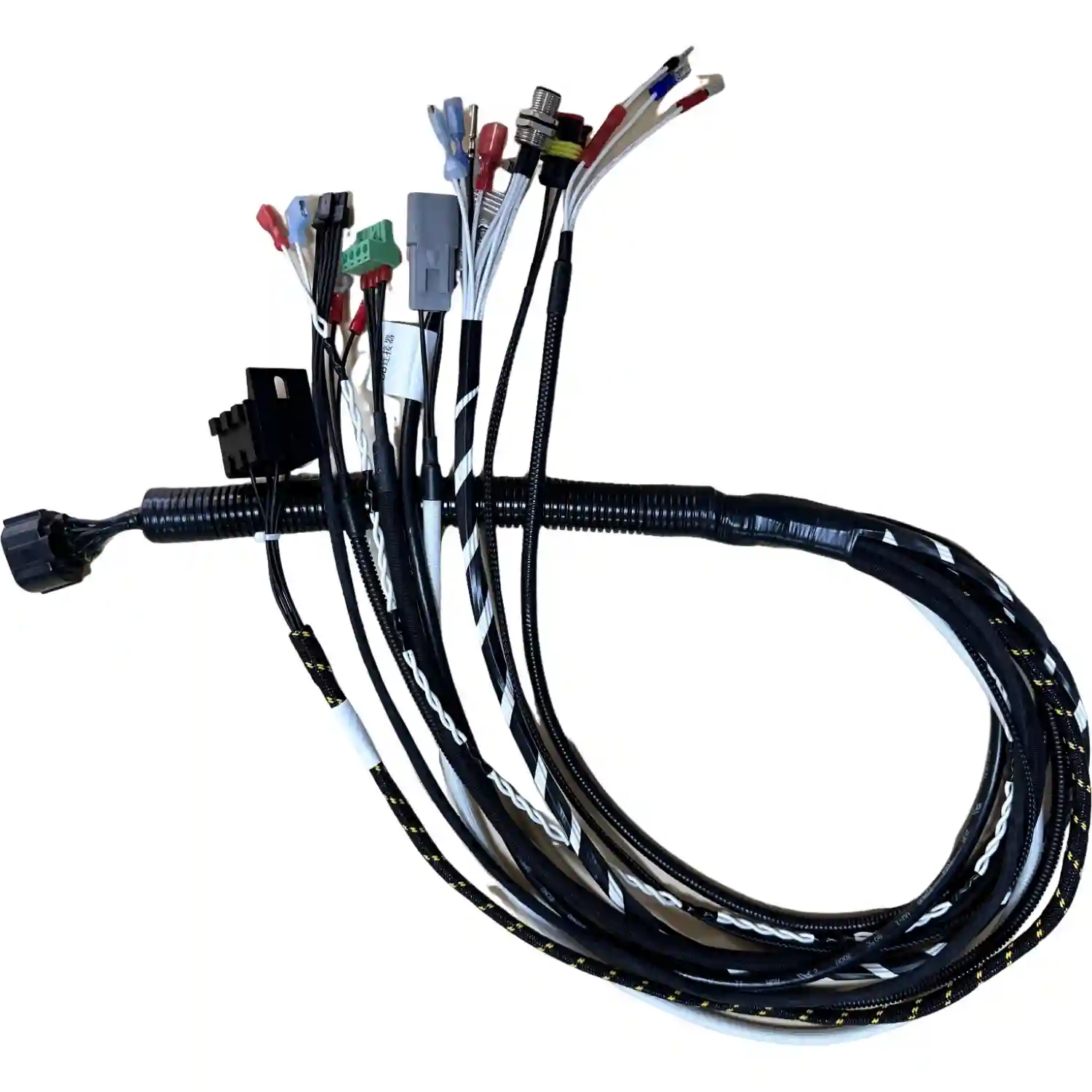
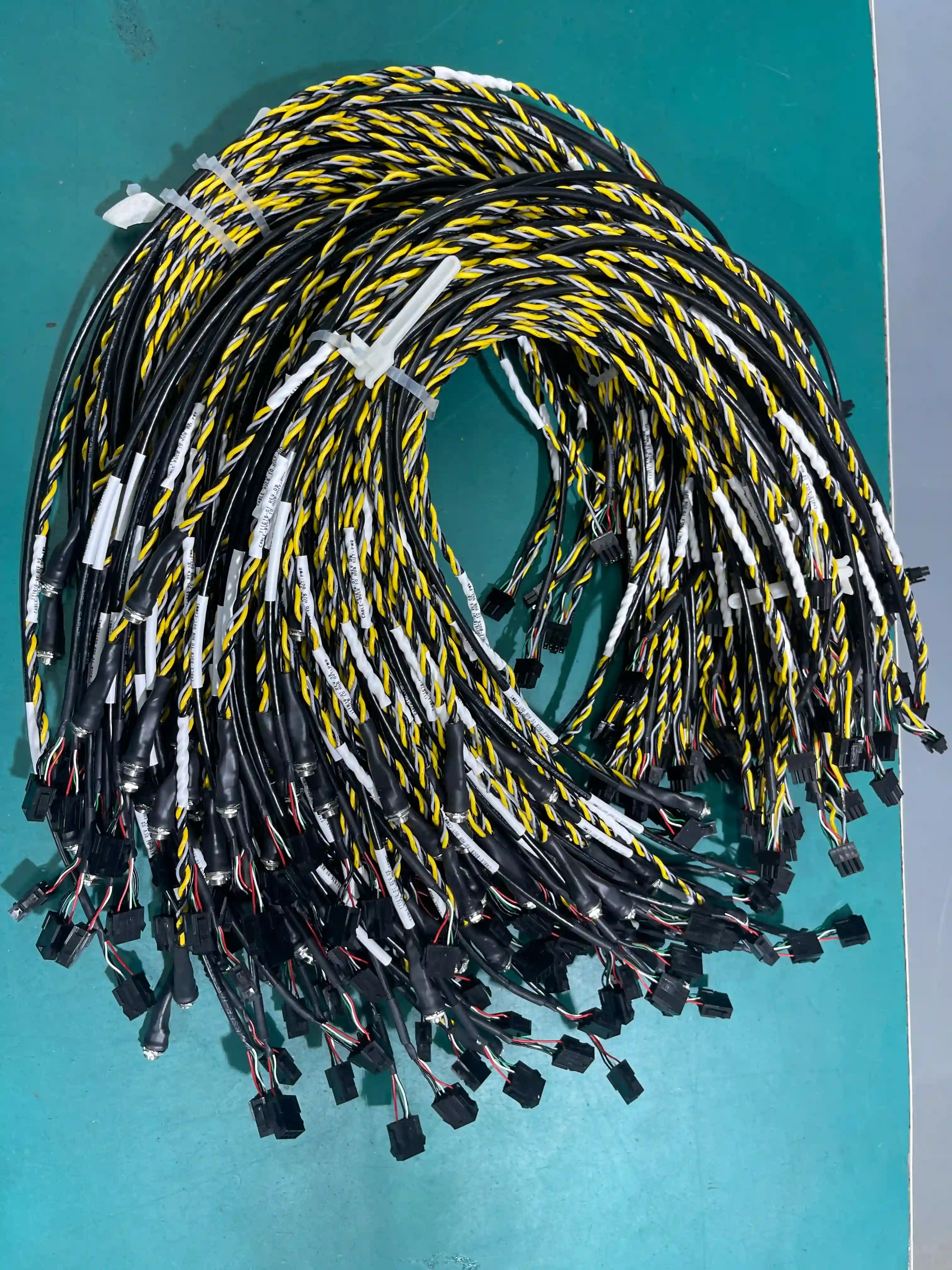
A Kevlar-reinforced probe cable is a custom cable assembly that uses aramid yarn or a Kevlar reinforcement layer to carry mechanical load separately from the copper conductors. A probe cable assembly is a finished cable with connectors, strain relief, labels, and test records for sensors, measurement probes, service tools, or industrial instruments. Strain relief is a mechanical feature that transfers bending and pulling force away from conductor terminations and connector contacts.
Denne guide er skrevet til design engineers, sourcing managers og NPI quality teams, der allerede har a probe concept, sample cable eller initial RFQ og skal vælge en custom cable assembly supplier. Rollen er senior factory engineer med mere end 20 års erfaring i cable assembly, wire harness production, connector termination and supplier recovery. Objective er at vise, hvordan du specificerer Kevlar-reinforced cables so the prototype can hit price, handling life, and release evidence together. Key result is a practical decision model with standards, numbers, and supplier questions that prevent weak substitutions.
— Hommer Zhao, Grundlegger & CEO: Hvis kunden beder om a Kevlar reinforcement layer, må cost reduction ikke starte med at fjerne layeret. Først låser vi tensile path, jacket OD, bend radius og test evidence, derefter forhandler vi raw material.
Why Kevlar reinforcement changes the cable design
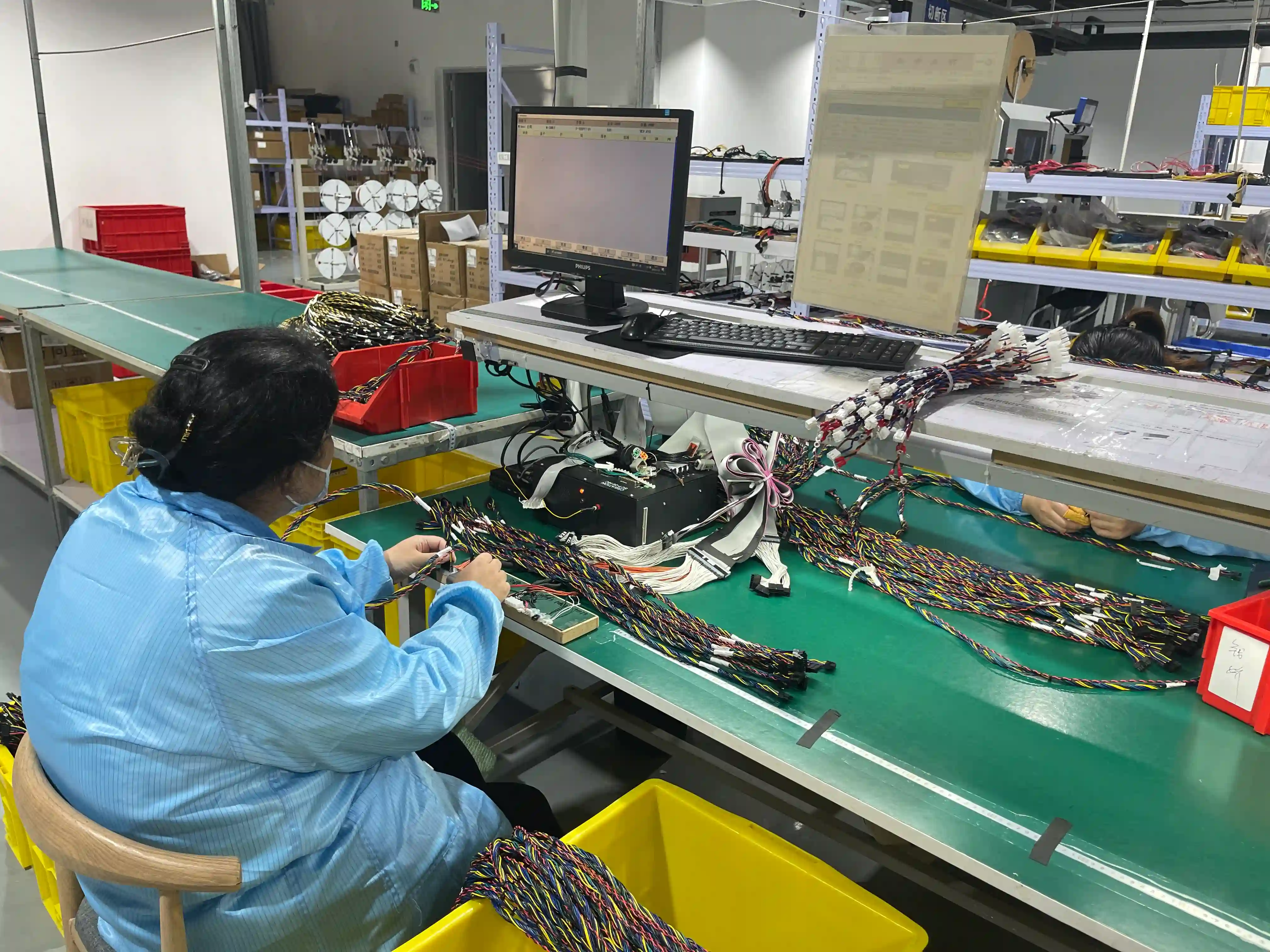
Kevlar changes the job of the cable. A normal multi-core cable asks the copper conductors, insulation, jacket and connector termination to survive electrical and mechanical load together. A Kevlar-reinforced design separates those jobs: the aramid layer takes tensile stress, while the conductors carry signal or power. That separation matters when an operator pulls a probe from equipment, drags a sensor cable across a rough fixture, or coils the assembly many times per shift.
Kevlar is an aramid fiber known for high tensile strength relative to weight. In cable assembly, the factory still has to prove the full design, because a strong yarn inside a weak termination does not create a strong assembly. The connector, backshell, boot, overmold, heat shrink, crimp support and cable exit geometry must carry load as a system.
The weak specification is “use Kevlar cable, make sample.” The concrete substitution is: “Build probe cable assembly with Kevlar reinforcement layer retained through the strain-relief zone, jacket OD tolerance stated on drawing, minimum bend radius defined, connector pull-load target agreed, 100% continuity and shorts test, first article photos, and no jacket or reinforcement substitution without written approval.” That wording keeps the cost conversation from damaging the performance requirement.
Case: price recovery without removing the reinforcement layer
In the Canadian probe-cable case, the customer rejected the first quotation because the Kevlar-reinforced cable price was higher than alternatives. The commercial pressure was real, but the technical requirement was also real: the prototype run was only 10-box prototype order, and the later program depended on a 100-box bulk order plan. If the factory had changed the reinforcement quietly, the prototype might have passed purchasing review and failed field handling.
Our account and engineering teams treated the issue as cost-reduction engineering, not discounting alone. We kept the Kevlar reinforcement layer as a locked requirement, reviewed alternate raw material suppliers, checked whether the jacket and reinforcement construction still matched the drawing intent, and secured management approval for a special prototype price. The result was a secured prototype order and a clearer route to the larger bulk run.
The lesson is practical: cost reduction is safest when the supplier names which variables are open and which are locked. Open variables can include raw-material supplier, MOQ packaging, delivery schedule, prototype margin, or bulk-order price breaks. The locked variables should include reinforcement type, jacket material, cable OD, conductor size, connector series, strain-relief method, and electrical test. That decision framework gives purchasing room to negotiate without letting engineering risk move silently.
— Hommer Zhao, Grundlegger & CEO: For a 10-box prototype with a 100-box bulk path, I want two quotes: one prototype price that protects learning, and one volume price that protects the approved cable construction.
What to specify before requesting samples
Start with the mechanical abuse case. Is the cable pulled straight, bent at the connector, dragged over metal, exposed to oil, used outdoors, coiled every day, or connected to a handheld probe? Those answers decide whether the reinforcement must run full-length, anchor into a boot, sit under a braided shield, or stop before a flexible tail. For overmolding, the mold material must grip the jacket without creating a sharp transition that breaks conductors during bending.
Next define the electrical path. Probe cables often carry low-level sensor signals, shielded analog lines, power plus signal, or mixed conductors. If the assembly is shielded, specify shield termination rather than writing “shielded cable” only. For related EMC decisions, NorKab's shield termination guide explains drain wires, 360-degree clamps, pigtails and connector-shell bonding. The reinforcement layer should not interfere with shield continuity or connector seating.
Then define measurement evidence. IPC-A-620 through IPC provides workmanship language for cable and wire harness assemblies, including visual acceptance and process expectations. UL-758 through UL is relevant when appliance wiring material style, voltage rating, temperature rating or insulation system has to remain controlled. ISO 9001 supports document control and supplier traceability, but the pull-load number and bend cycle requirement still belong on your drawing or test plan.
Comparison table: reinforcement choices for probe cables
| Design choice | Best use case | Factory control point | Risk if unclear | Release evidence |
|---|---|---|---|---|
| Kevlar reinforcement layer | Probe cables with pull load, handling abuse or repeated coiling | Layer position, anchoring and no-substitution rule | Strong cable body but weak connector exit | First article photos plus pull-load test target |
| Braided textile sleeve | Abrasion protection and handling feel | Sleeve diameter, end treatment and label location | Fraying, bulky ends or inconsistent OD | Visual inspection and packaging audit |
| TPU outer jacket | Flexible industrial cables with abrasion exposure | Jacket hardness, OD and chemical compatibility | Cracking, swelling or poor mold adhesion | Material datasheet and bend check |
| Overmolded strain relief | Connector exit needs sealed or molded support | Mold material, boot length and cable grip | Sharp stiffness transition or conductor fatigue | FAI photos and sample flex review |
| Heat shrink strain relief | Low-volume prototypes and simpler probe tails | Shrink ratio, adhesive, overlap length | Slippage or insufficient bend support | Dimensional check and pull sample |
| Shielded construction | Low-level signals or noisy industrial equipment | Drain path, shield coverage and connector bonding | Noise pickup or unstable measurement data | Shield continuity test and pin report |
The table shows why “Kevlar cable” is not a complete drawing note. The reinforcement solves tensile abuse, not every failure mode. A probe cable that sees vibration may need better strain relief. A probe cable near motors may need better shield termination. A cable used in washdown may need jacket and sealing decisions. For harsh environment cable solutions, the correct answer is usually a stack of small controls, not one expensive material.
Prototype and bulk pricing without hidden substitutions
Small prototype runs are expensive because the supplier buys special cable, sets up tooling, validates drawings, creates test instructions, and spreads engineering time across a small order. In the case above, the prototype was a 10-box prototype order, while the commercial plan pointed to a 100-box bulk order plan. Those two quantities should not use the same cost logic.
A good quote separates four numbers. First is one-time engineering or fixture cost. Second is prototype unit price. Third is bulk unit price at the expected order size. Fourth is any raw material MOQ that remains in stock after the prototype. If the supplier hides all four inside one price, purchasing cannot tell whether the expensive part is cable, tooling, labor, freight or risk.
Ask the supplier to mark any alternate material proposal as “engineering approval required.” For example, an alternate jacket supplier may be acceptable if OD, hardness, voltage rating and bend behavior match the drawing. An alternate reinforcement layer is not acceptable unless the buyer approves the mechanical test result. For material control in low-volume builds, this distinction keeps prototype learning usable for production.
— Hommer Zhao, Grundlegger & CEO: A supplier can reduce price with MOQ planning, split delivery or alternate sourcing. They should not reduce price by changing the mechanical path unless the drawing, sample and test result all change together.
Testing plan for Kevlar-reinforced probe cables
Electrical testing should remain mandatory even when the failure concern is mechanical. Every finished probe cable should receive continuity and shorts testing against the pin map. If the signal is sensitive, add resistance, shield continuity or functional test as required. NorKab's cable testing capability can align pinout, fixture and report format before prototype release.
Mechanical testing should match the actual abuse. A straight pull test is useful when users yank the cable from equipment. A bend test is more useful when the cable exits a handheld probe at an angle. A twist or flex review is useful when the cable is repeatedly coiled. The drawing should state where the force is applied, how long the sample is held, and whether the pass condition is no electrical open, no jacket crack, no connector movement, or no visible yarn slip.
For production, do not over-test every unit if the risk does not require it. A practical release plan is 100% electrical test, first article dimensional review, sample pull test per lot or setup, and extra bend review after any material change. For higher-risk programs, keep a golden sample and a rejected sample so operators and inspectors can compare cable exit shape, sleeve finish, label position and connector seating.
RFQ checklist for sourcing teams
Send the supplier a complete package instead of a photo and target price. The minimum package should include cable construction, conductor count, AWG, shield requirement, reinforcement requirement, jacket material, OD target, connector part numbers, strain relief, length tolerance, labeling, packaging, annual volume and prototype quantity. If the product is still under development, mark open decisions clearly rather than leaving the factory to guess.
For a Kevlar-reinforced probe cable, include these direct questions in the RFQ:
- Will the Kevlar reinforcement layer be anchored inside the strain relief, or only present in the cable body?
- Which cable supplier and material revision will be used for prototype and bulk production?
- What pull-load or bend test can be performed on first articles?
- Which dimensions will be inspected: cable OD, finished length, boot length, connector orientation and label position?
- What changes require written approval before shipment?
- How will remaining raw material be handled if the prototype does not convert to the 100-box bulk order plan?
This is also where sourcing should decide whether price pressure is a negotiation issue or a design issue. If the target price cannot be reached with the reinforcement locked, engineering may need to change cable length, jacket, connector, test burden or order size. Silent substitution is the only answer that should be rejected immediately.
FAQ
Q: What is a Kevlar-reinforced probe cable used for?
A Kevlar-reinforced probe cable is used when a probe, sensor or measurement lead sees pull load, repeated coiling, abrasion or operator handling that can damage a normal cable. In the case above, the buyer needed a 10-box prototype order before a 100-box bulk order plan.
Q: Does Kevlar reinforcement replace strain relief?
No. Kevlar carries tensile load inside the cable, but strain relief controls where bending and pulling forces enter the connector. A good drawing should define reinforcement anchoring, boot length, bend radius and at least one mechanical release check before production.
Q: Which standards apply to Kevlar-reinforced cable assemblies?
Use IPC-A-620 for cable assembly workmanship, UL-758 when appliance wiring material ratings or insulation traceability matter, and ISO 9001 for document control and supplier traceability. None of these standards replaces the project-specific pull-load, bend or electrical test limits.
Q: How can prototype cost be reduced without weakening the cable?
Keep the Kevlar reinforcement layer, connector and test plan locked, then negotiate alternate raw-material suppliers, MOQ handling, split delivery, prototype margin and bulk price breaks. In the Canadian case, the supplier protected the reinforcement requirement while supporting a 10-box prototype path.
Q: What should be tested on every finished probe cable?
At minimum, test 100% of finished cables for continuity and shorts against the pin map. Add shield continuity, resistance or functional testing when the probe signal requires it. Mechanical pull or bend checks are often sample-based per lot or after material changes.
Q: What information should I send for a Kevlar probe cable RFQ?
Send conductor count, AWG, shield need, Kevlar reinforcement layer requirement, jacket material, OD target, connector part numbers, length tolerance, strain relief, labels, packaging, 10-box or other prototype quantity, expected bulk volume and required standards such as IPC-A-620.
Need help reviewing a Kevlar-reinforced probe cable?
NorKab can review cable construction, Kevlar reinforcement, connector choice, strain relief, overmolding, electrical test, prototype quantity and bulk-order cost gates before tooling or sample build. Contact NorKab with your drawing, target pull or bend conditions, and expected volume, and our team will help turn the RFQ into a measurable probe cable assembly plan.