TL;DR: high impedance i micro coax skal behandles som testmetode, ikke kun workmanship
- En AWG#40 CABLINE-VS 1:1 assembly kan se korrekt ud og stadig fejle impedance eller resistance limits.
- Quote package skal låse connector series, 100mm length, cable type, shield path, bend handling og test method.
- IPC-A-620, UL-758 og IATF 16949 giver release-sprog for workmanship, material control og containment.
- For beta builds bør failed units sorteres med samme fixture, samme limit og samme revision som customer test.
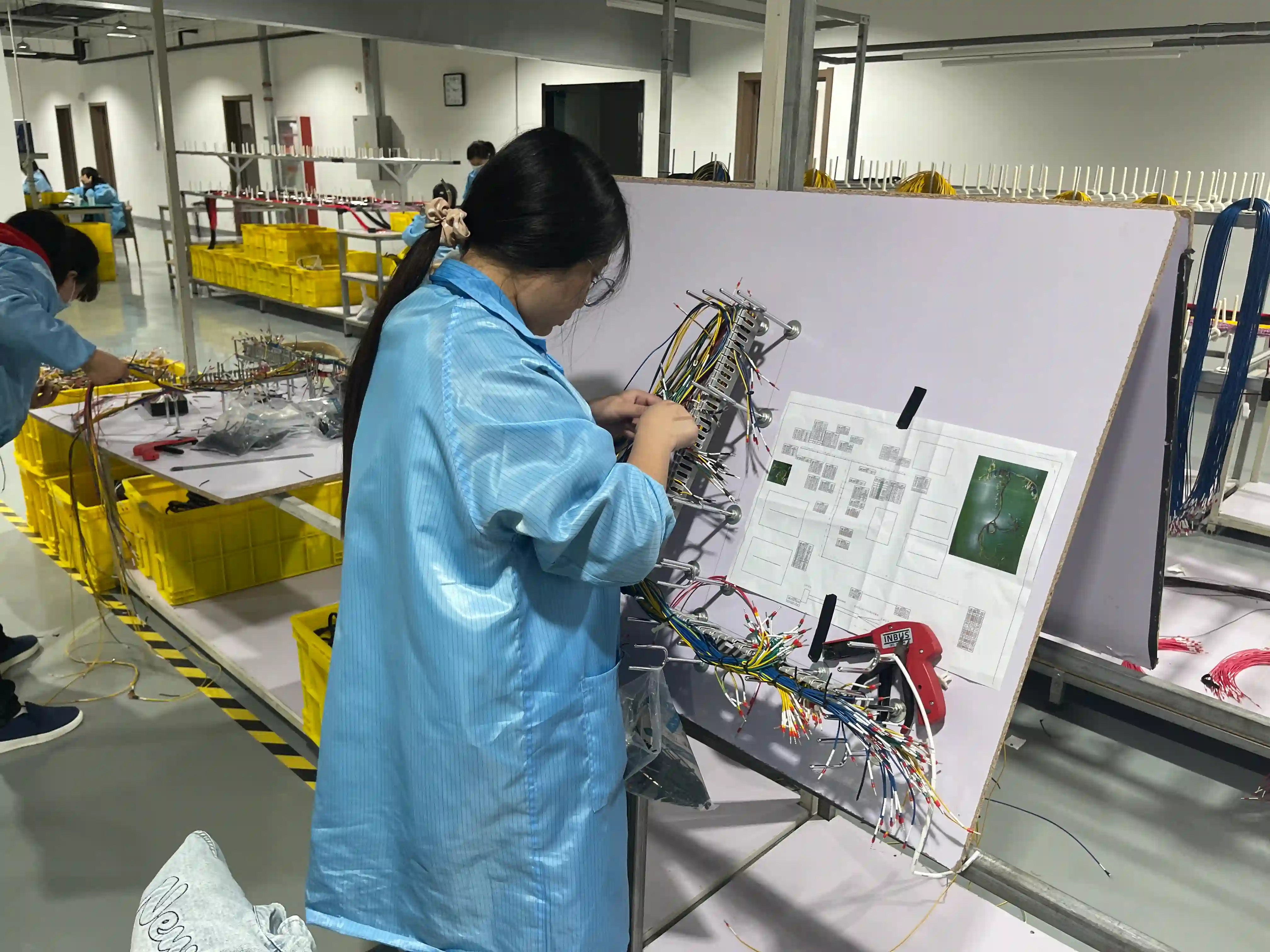
A European thermal imaging OEM experienced a critical production halt due to high impedance defects in a micro-coaxial cable assembly used for a beta production series. The case was severe: 1296 defective units out of 2000 of AWG#40 CABLINE-VS 1:1 100mm length micro-coax assemblies failed, the order was cancelled, and the customer demanded refunds before the technical team aligned on the real fault boundary.
A micro coax cable assembly is a fine-pitch cable build that carries high-speed or sensitive signals through individually shielded micro-coax conductors and miniature connectors. High impedance failure is an electrical rejection where the measured path exceeds the agreed limit because of conductor, shield, contact, termination or test-method variation. Test correlation is the process of proving that supplier and customer fixtures measure the same electrical characteristic under the same revision and acceptance limit.
Denne guide er skrevet til hardware engineers, NPI quality teams og sourcing managers, der allerede har a drawing, sample eller beta build og skal vælge en micro coaxial cable assembly supplier. Rollen er senior factory engineer med mere end 20 års erfaring i cable assembly, connector termination og failure recovery for industrial imaging, medical, robotics og automotive OEMs. Objective er at vise, hvordan du specificerer, tester og frigiver micro-coax assemblies, så a high-impedance crisis bliver isolated by evidence instead of argued by email. Key result er a practical RFQ and recovery model med standards, concrete numbers and release decisions.
— Hommer Zhao, Grundlegger & CEO: Når 1296 af 2000 micro-coax assemblies fejler, starter jeg ikke med at diskutere skyld. Jeg låser fixture, limit, cable revision og connector lot, ellers måler to teams to forskellige produkter.
Hvorfor high impedance sker i AWG#40 micro coax assemblies
High impedance i AWG#40 micro coax assemblies opstår normalt fra en kombination af miniature contact geometry, fragile conductor handling og unclear measurement limits. I-PEX lists CABLINE-VS as a 0.5 mm pitch micro-coax connector family with AWG 36, AWG 38, AWG 40, AWG 42 and AWG 44 options, and the AWG 40 current rating is listed at 0.3 A/contact for up to 50 contacts on the public product page. Those numbers tell the factory that process margin is small; they do not define the customer acceptance limit.
For a 100mm 1:1 assembly, a visual pass can hide three electrical risks. The center conductor can be damaged during strip or termination. The shield path can be inconsistent at the connector shell. The mating interface can add resistance if locking, insertion depth or contact cleanliness varies. A supplier who only performs open/short testing may ship parts that pass continuity but fail the customer's impedance or resistance screen.
The weak specification is “CABLINE-VS cable, 100mm, test OK.” The concrete substitution is: “Build AWG#40 CABLINE-VS 1:1 100mm assembly, exact connector part numbers and cable construction, no substitution without written approval, 100% continuity and shorts, shield continuity check, resistance or impedance limit by pin group, first article photos, test fixture revision, sample correlation against customer fixture before beta shipment.” That wording gives engineering a measurable gate.
Case recovery: 1296 failed units out of 2000
The Belgian thermal-imaging case had a trust problem before it had a production solution. The customer saw 1296 defective units out of 2000, cancelled the order and requested refunds. Our team halted production immediately, quarantined the remaining stock, and moved the discussion from “bad cable” to a joint technical analysis of specification definition and testing method mismatch.
The recovery path had four gates. Gate 1 was containment: separate shipped stock, WIP, connector lots and test records. Gate 2 was correlation: compare the customer's failed samples against our test fixture and limit. Gate 3 was specification update: document the electrical characteristic that was actually failing, not only the drawing title. Gate 4 was replacement: manufacture new samples, issue new test reports and process 1296 replacement units only after the revised test method was accepted.
That sequence protected both sides. The customer received an evidence trail instead of a promise. The factory avoided repeating the same beta failure under a different lot number. The lesson is uncomfortable but useful: micro-coax quality cannot depend on a generic pass/fail label. It needs a named measurement, a fixture revision and a limit that both teams can reproduce.
— Hommer Zhao, Grundlegger & CEO: Open/short test er minimum. For AWG#40 micro coax in imaging equipment, I want shield continuity and the customer's impedance or resistance limit in the traveler before beta release.
RFQ data der forhindrer impedance disputes
A micro-coax RFQ should identify the complete signal path, not only the connector family. Send exact CABLINE-VS connector part numbers, contact count, 1:1 or crossed pinout, 100mm measurement points, cable type, AWG, shield termination method, bend envelope, mating orientation and expected test report format. If the assembly routes near a hinge, lens module or compact enclosure, add minimum bend radius and no-clamp zones to the drawing.
For custom cable assembly sourcing, the drawing should separate workmanship acceptance from electrical performance acceptance. IPC-A-620 can define visual acceptability for cable and wire harness assemblies, but the customer must still provide the impedance, resistance or shield continuity limits that matter to the product. UL-758 becomes relevant when appliance wiring material style, voltage rating, temperature rating or insulation system must remain controlled through sourcing.
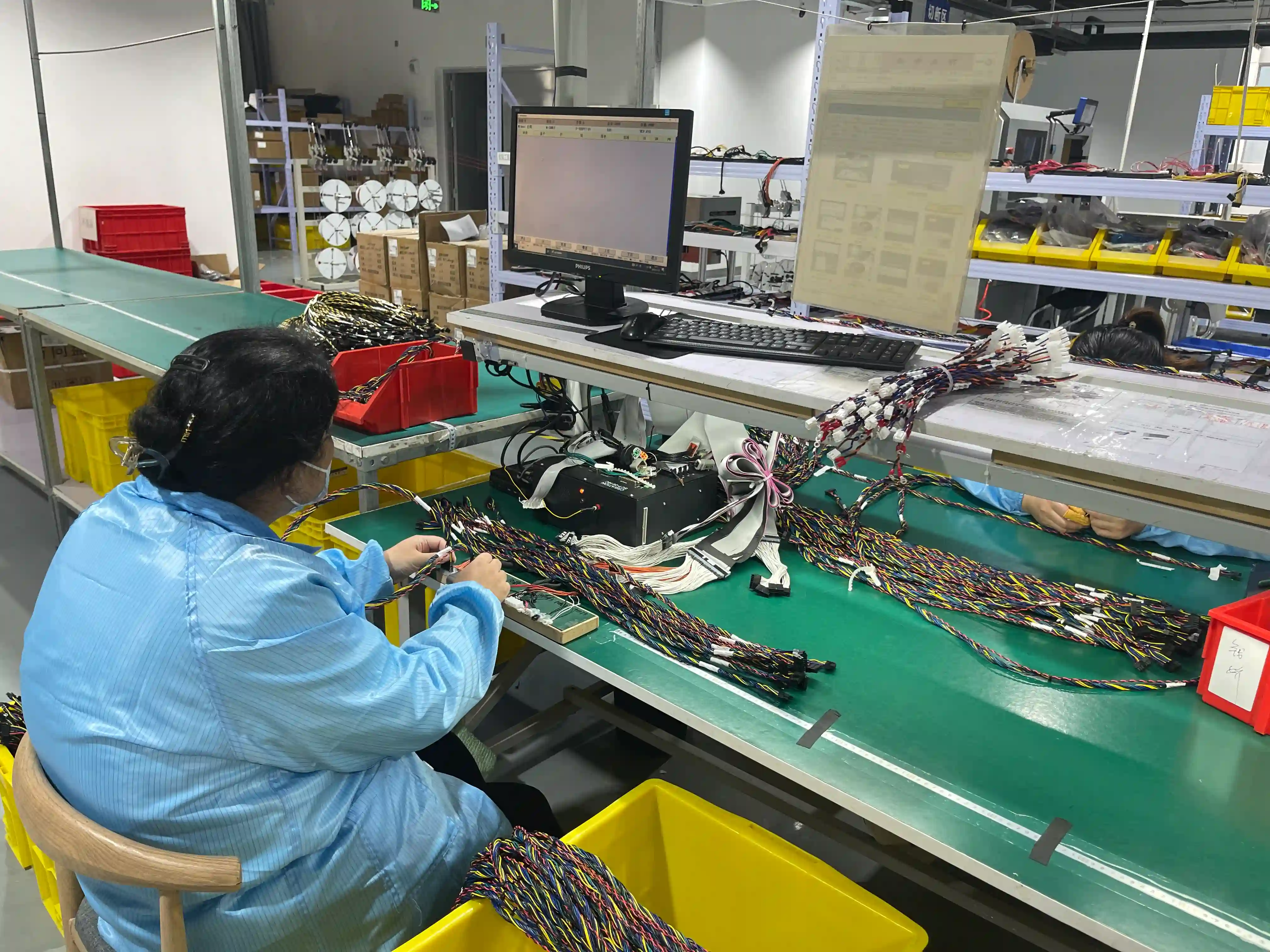
For cable testing, ask for the actual instrument type and fixture logic. A handheld continuity tester, a programmable cable tester and a high-frequency fixture do not answer the same question. If the customer rejects parts on a different tool, the RFQ should require correlation samples before the first 2000-unit beta lot. That small gate is cheaper than sorting 2000 miniature assemblies after shipment.
Comparison table: what to test before beta shipment
| Test or control point | Minimum evidence | Typical quantity | Failure caught | Release decision |
|---|---|---|---|---|
| Continuity and shorts | Pin-by-pin report against 1:1 map | 100% of units | Open conductor, crossed pins or shorted shield | Mandatory for every lot |
| Contact resistance or impedance limit | Customer-approved limit and fixture revision | 100% or agreed sample plan | High impedance like the 1296/2000 case | Required before beta shipment |
| Shield continuity | Shell, drain or shield path verification | 100% for sensitive imaging builds | Noise pickup or unstable signal reference | Required for shielded micro coax |
| Connector mating check | Locking bar, insertion depth and visual photo | First article plus line checks | Incomplete mating or contact wipe variation | Hold shipment if lock is inconsistent |
| Bend handling | Defined bend radius and packaging fixture | First article plus packaging audit | Conductor fatigue near connector exit | Revise packaging if bend mark appears |
| Lot traceability | Connector lot, cable lot, operator and tester ID | Every production lot | No containment path after field issue | Required for replacement release |
The table shows why the test plan must match the failure mode. Continuity alone catches gross wiring errors, but it does not prove impedance stability. For coaxial cable assembly programs with miniature connectors, the buyer should decide early whether impedance is a design validation item, a 100% production item or a sample audit. The wrong answer is leaving the decision until failed parts are already in the customer's lab.
Standards and public references to cite on the drawing
IPC-A-620 through IPC is the common workmanship language for cable and wire harness assemblies. Use it for visual acceptance, conductor handling, termination quality, soldered wire joints where applicable and inspection class language. Do not use IPC-A-620 as a substitute for the customer's electrical limit; it cannot guess the correct high-impedance threshold for a thermal-imaging signal path.
UL-758 through UL is relevant when the assembly uses controlled appliance wiring material or when the OEM needs voltage, temperature and insulation traceability in the cable construction. For factory quality control, IATF 16949 gives useful language for defect prevention, containment, change control and lot traceability even outside automotive programs. For connector-specific facts, use the I-PEX CABLINE-VS product page because it names the 0.5 mm pitch family, AWG options and current ratings.
The cleanest drawing stack is short and measurable: IPC-A-620 Class 2 or Class 3 as applicable, UL-758 wire style if required, exact connector and cable part numbers, electrical test limits, test fixture revision, first article evidence and change approval rules. For production systems tied to certifications and quality systems, add record retention time and escalation rules for any test correlation failure.
— Hommer Zhao, Grundlegger & CEO: A standard tells the factory how to judge workmanship. The drawing tells the factory what the product must measure. Micro coax needs both, especially when AWG#40 conductors and 0.5 mm pitch connectors are involved.
How to select a micro-coax assembly supplier
Choose a supplier who asks uncomfortable questions before quoting. A strong supplier will ask for connector mating direction, contact count, cable length tolerance, customer test method, impedance or resistance limit, acceptable alternates, packaging bend radius and the expected failure response time. A weak supplier quotes from a sample photo and writes “100% tested” without naming the test.
Ask for three proof points before the first order. First, request first article photos that show connector orientation, cable exit and label position. Second, request a sample test report with the same columns you expect in production. Third, ask how the supplier will isolate a failure by connector lot, cable lot and tester ID. If the answer is manual memory, the supplier is not ready for a 2000-unit beta build.
For prototype wire harness and cable builds, it is acceptable to begin with assumptions if they are written down. For production release, every assumption should become a drawing note, BOM line, test limit or approved deviation. That conversion is the difference between a prototype conversation and a repeatable supply chain.
When this approach is not enough
This guide does not replace product-level signal validation. If the thermal-imaging system, camera module or high-speed link has its own channel model, the OEM still needs design validation on the complete equipment path. The cable factory can control assembly workmanship, connector lots, length, shield termination and production test. The OEM must define the electrical limit that proves the assembly is fit for that product.
For very high-speed links, a basic cable tester may not measure the characteristic that matters. You may need network analysis, customer-owned fixtures or functional test at the equipment level. The practical rule is simple: if the customer rejects by impedance, insertion loss or signal stability, the supplier's release plan must include a correlated method for that same characteristic before shipment.
References
- I-PEX CABLINE-VS product page: https://www.i-pex.com/product/cabline-vs
- IPC overview and IPC-A-620 context: https://en.wikipedia.org/wiki/IPC_%28electronics%29
- UL organization and UL-758 context: https://en.wikipedia.org/wiki/UL_%28safety_organization%29
- IATF 16949 quality management context: https://en.wikipedia.org/wiki/IATF_16949
FAQ
Q: What causes high impedance in a micro coax cable assembly?
High impedance can come from AWG#40 conductor damage, poor contact seating, shield termination variation, contaminated mating surfaces or a test-method mismatch. In the case above, 1296 out of 2000 units failed before the specification and test method were corrected.
Q: Is continuity testing enough for CABLINE-VS micro-coax assemblies?
Continuity testing is necessary, but it is not enough when the customer rejects by impedance, resistance or signal behavior. For a 100mm CABLINE-VS 1:1 assembly, add shield continuity and the customer-approved electrical limit to the release plan.
Q: Which standards should appear on a micro coax assembly drawing?
Use IPC-A-620 for cable assembly workmanship, UL-758 when wire style or insulation rating must be controlled, and IATF 16949-style traceability language when containment and change control matter. The drawing still needs exact numerical test limits.
Q: How should a supplier handle 1296 defective units out of 2000?
The supplier should stop production, quarantine all lots, compare failed samples on both test methods, revise the specification, issue new reports and release replacement units only after correlation. In this case, 1296 replacement units were processed after the technical gap was closed.
Q: What should I include in a micro coax cable assembly RFQ?
Include exact connector part numbers, AWG#40 cable construction, 1:1 pin map, 100mm measurement points, bend radius, shield path, test method, impedance or resistance limit, annual volume and required standards such as IPC-A-620.
Q: When should impedance testing be 100% instead of sample based?
Use 100% testing when the beta or production failure cost is high, the customer screens every unit, or the connector process has not yet proven stable. A 2000-unit beta build with prior high-impedance rejects should not rely on sample testing alone.
Need a micro coax failure review before the next build?
NorKab can review CABLINE-VS drawings, AWG#40 cable construction, 100mm or custom lengths, shield termination, test fixture correlation, IPC-A-620 workmanship evidence and replacement-lot release data. Contact NorKab with your drawing, failed test report and target volume, and our team will help turn the RFQ into a measurable micro coax cable assembly release plan.