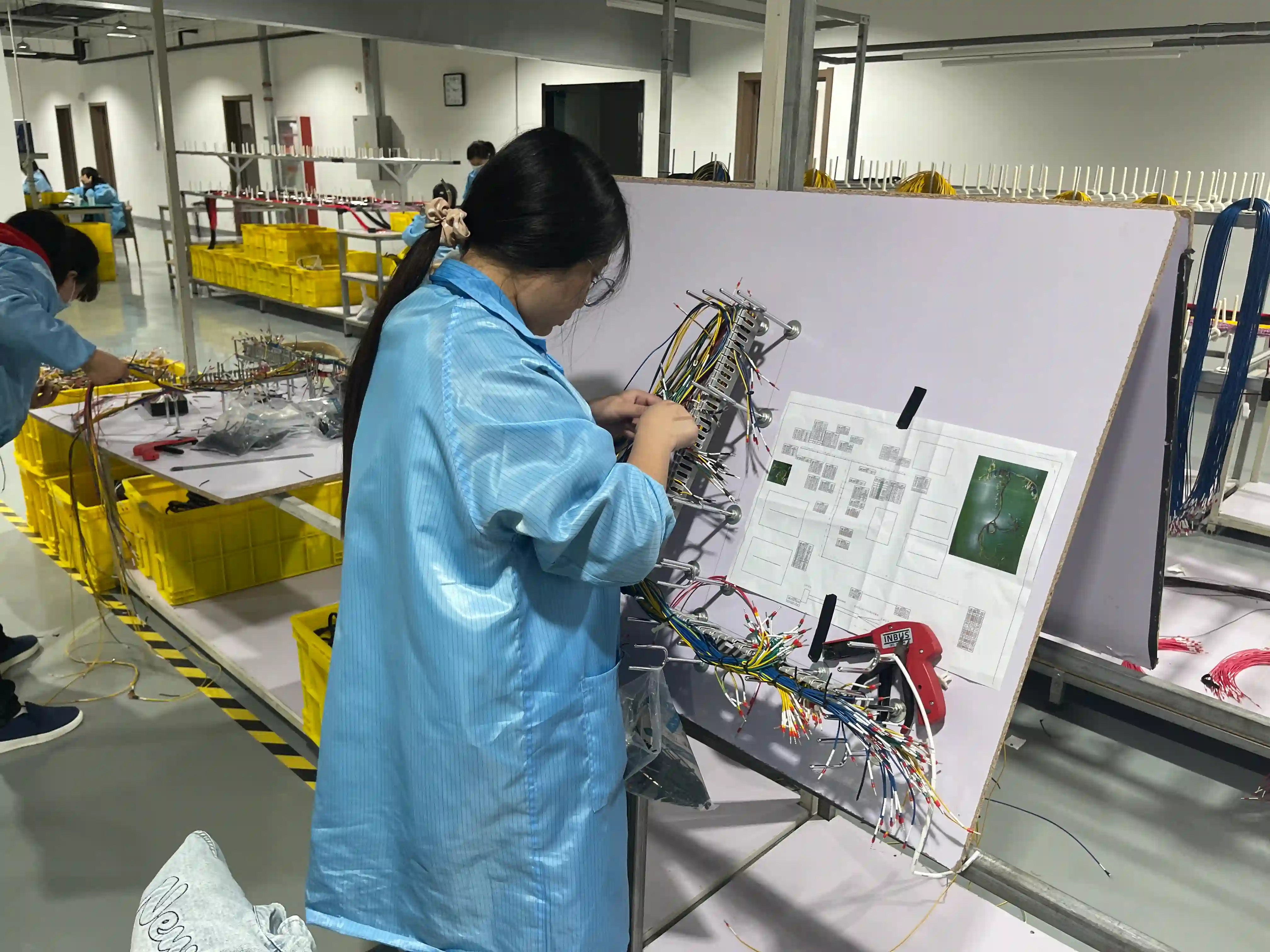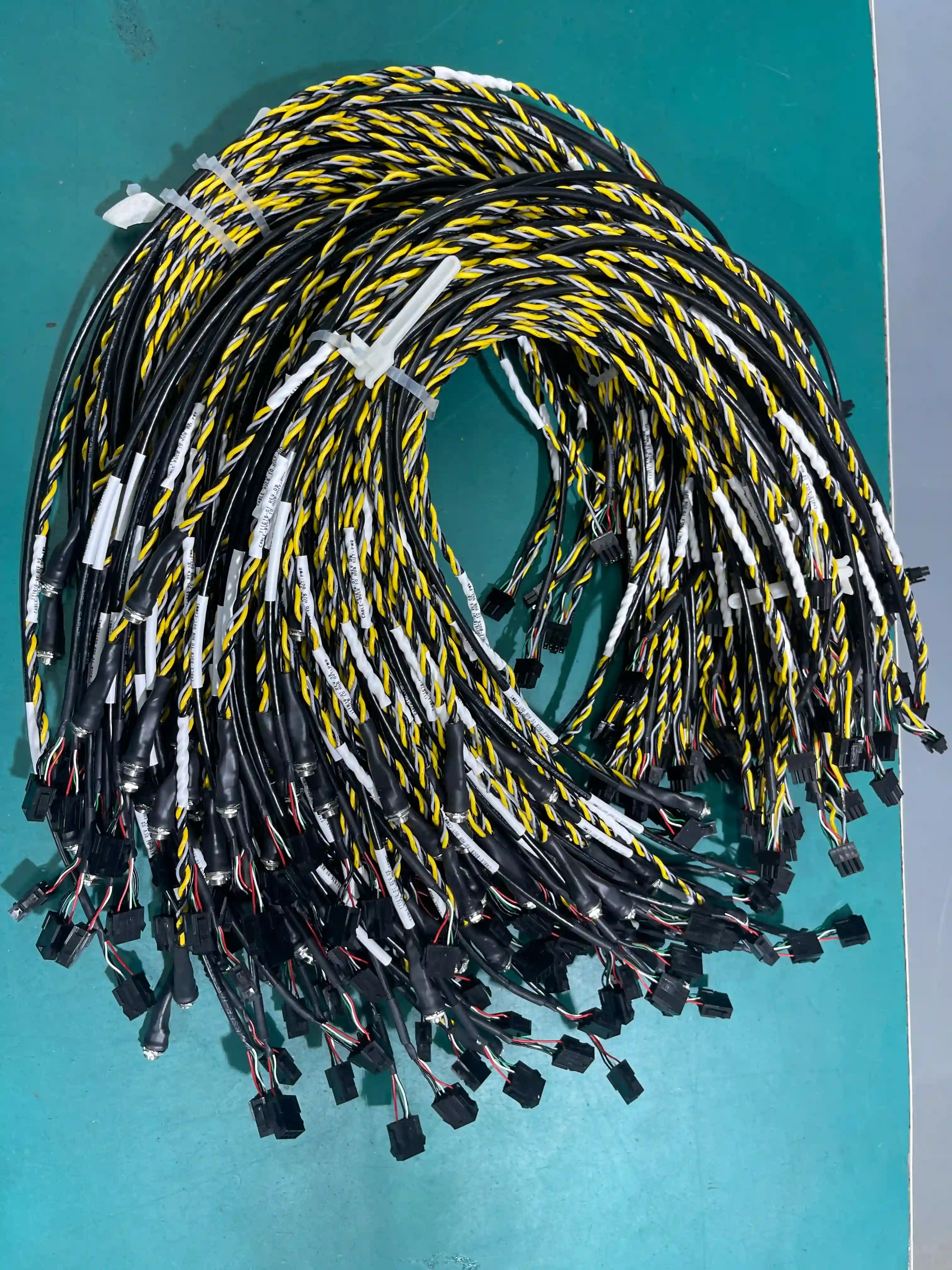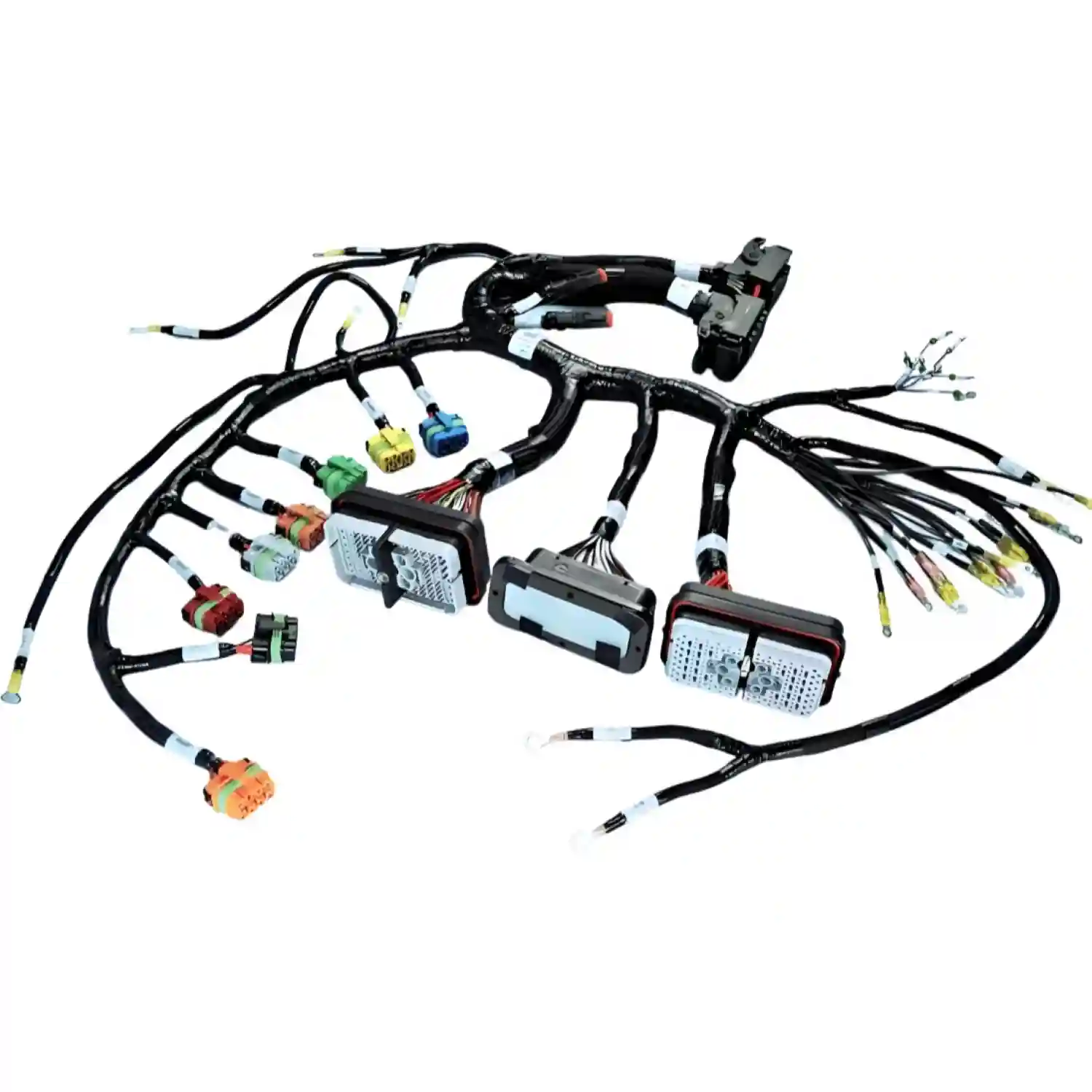
In a 2025-Q4 German heavy-duty truck program, a European customer asked NorKab to quote a long-lifecycle wire harness with grommets. The first RFQ had drawing quality gaps, so the customer cancelled the initial quote and re-issued the package with corrected specifications. The hard numbers shaped the sourcing risk: SOP 2029, EOP 2035, a 6-year production lifecycle, and 1 re-issued RFQ due to drawing errors. A small mistake in the RFQ stage would have followed the program for years.
A heavy-duty truck wire harness RFQ should be validated through drawing review, BOM review, grommet and seal checks, connector availability, process routing, test definition, and lifecycle change control before the supplier locks price and lead time. If the engineering package is unclear, the first quote may look fast but collapse when production, quality, and purchasing inspect the details.
TL;DR: validate the RFQ before you validate the price
- Check every drawing note, cavity callout, grommet dimension, and wire length before costing a truck harness.
- Use IPC-A-620 workmanship criteria and IATF 16949-style change control for long program discipline.
- Separate quote assumptions from confirmed requirements; the gap list protects both buyer and supplier.
- For SOP 2029 to EOP 2035 programs, lifecycle risk matters as much as the first prototype price.
A heavy-duty truck wire harness is an electrical interconnect assembly built for chassis, cabin, engine-bay, body, lighting, sensor, or power distribution functions in commercial vehicles. An RFQ validation review is a technical check that confirms drawings, BOM, terminals, connectors, grommets, routing, tests, and assumptions before a quotation becomes a production promise. A grommet harness is a harness that uses molded rubber, silicone, EPDM, or similar pass-through protection to seal and protect wires where they cross panels or body openings.
This guide is written for truck OEM engineers, supplier-development teams, and sourcing managers who are preparing to nominate a harness supplier for a long production window. The role behind the article is a senior factory engineer with more than 20 years in wire harness and cable assembly manufacturing for automotive, industrial, and equipment programs. The objective is direct: show which RFQ details decide whether a heavy-duty truck harness quote is buildable, auditable, and stable from launch through end of production.
— Hommer Zhao, Grundlegger & CEO: For a harness running from SOP 2029 to EOP 2035, I will not price from a drawing that leaves grommet position, cavity population, or test scope open. Six years is too long to carry an assumption.
Why RFQ validation matters in heavy-duty truck harness programs
Heavy-duty truck harnesses are not simple cable sets. They may pass through bulkheads, route beside brackets, sit near heat and vibration, serve serviceable subassemblies, and require replacement compatibility years after launch. The quote must cover raw material, labor, test equipment, tooling, packaging, supplier risk, engineering support, and later revisions.
The German case shows the buying-stage problem. The customer needed a long-lifecycle harness quote, but the first technical package had enough drawing quality issues to force cancellation and re-issue. That event compressed the timeline, but it also prevented a worse outcome: a supplier quoting the wrong construction for a program planned around SOP 2029 and EOP 2035.
The weak RFQ instruction is "quote per attached drawing." The concrete substitution is: "quote only after confirming drawing revision, grommet material and dimensions, cavity population, terminal and seal match, wire gauge and color, branch lengths, test method, PPAP or FAI level, packaging, and open assumptions." That sentence turns the quote into a controlled engineering response.
Standards that shape the RFQ control plan
IPC-A-620 through IPC gives common workmanship language for wire preparation, crimping, insulation support, soldered wire connections where allowed, marking, lacing, sleeving, and final assembly acceptance. In an RFQ, it helps the buyer state the expected acceptance class and helps the supplier estimate inspection time correctly.
UL-758 through UL is relevant when the harness requires recognized appliance wiring material, insulation rating, voltage rating, temperature class, or traceability evidence. Even when the truck OEM drawing is the controlling document, UL material requirements should be visible in the BOM so purchasing cannot substitute wire during a shortage.
IATF 16949 supports disciplined automotive change control, supplier development, traceability, nonconforming output control, and production release methods. ISO 9001 supports document control and purchasing control. For a six-year truck program, these systems matter because the quote is only the first controlled document in a long chain.
— Hommer Zhao, Grundlegger & CEO: IPC-A-620 tells us how to judge crimp and assembly workmanship, while IATF 16949 tells us how to control the change path. A truck harness RFQ needs both views before nomination.
Comparison table: RFQ items that must be confirmed before quote release
| RFQ item | What to confirm | Factory validation method | Risk if unclear | Evidence to request |
|---|---|---|---|---|
| Drawing revision | Active revision, redlines, effective date, and cancelled drawings | Document-control review before costing | Supplier prices an obsolete construction | Revision log and gap list |
| Grommet package | Material, hardness, panel hole, wall thickness, orientation, and sealing target | 3D or 2D fit check with tooling estimate | Harness passes electrical test but fails installation | Grommet drawing, sample photo, and tooling note |
| Connector and terminal set | Series, cavities, seals, wedges, terminals, plugs, and approved alternates | BOM cross-check against connector datasheets and stock risk | Wrong seal or terminal creates field failures | BOM review sheet and approved-source list |
| Wire and protection | Gauge, color, stripe, insulation family, sleeve, tape, conduit, and heat exposure | Material availability and process routing review | Quote ignores heat, abrasion, or sourcing constraints | Material matrix and sample construction |
| Test scope | Continuity, shorts, resistance limits, diode checks, hipot if required, and label scan | Fixture concept and test-time estimate | Production cost misses fixture and cycle time | Test specification and fixture quote |
| Lifecycle plan | SOP 2029, EOP 2035, service parts, revision handling, and last-time buys | Program review with purchasing and engineering | Six-year supply chain risk is hidden in unit price | Assumption register and change-control plan |
The table is not a paperwork exercise. It separates what engineering has defined from what the supplier must assume. In a competitive RFQ, that separation lets the buyer compare suppliers on the same construction instead of comparing one complete quote with another quote full of silent assumptions.
Grommet and pass-through checks deserve early engineering time
A grommet changes the harness from a flexible electrical assembly into a mechanical interface. The RFQ should define panel thickness, hole size, insertion direction, seal lip geometry, cable exit angle, environmental exposure, and whether the grommet is loose, bonded, tied, taped, or overmolded to the bundle. If those details are missing, tooling and assembly time become guesses.
For heavy-duty equipment, the grommet also affects service work. A mechanic may pull the branch during replacement, route it through a dirty panel opening, or compress it around uneven sheet metal. The supplier needs to know whether the assembly is designed for factory installation only or for field replacement too. NorKab's heavy-duty equipment wire harness service covers the broader environment where abrasion, vibration, and sealing must be designed together.
When the harness crosses a wet or dirty zone, treat seal design as a build requirement, not a later inspection note. The waterproof wire harness service explains how connector seals, grommets, boots, and overmolded transitions interact. For release testing, connect the grommet plan to wire harness testing so continuity records, short checks, and any environmental verification are defined before fixture design.
Case process: how the re-issued truck RFQ was handled
In the 2025-Q4 German truck case, the first step was containment. The initial RFQ was not treated as a valid basis for price lock because the drawing quality issues could affect BOM, labor, grommet installation, and test scope. The customer re-issued the RFQ, and the factory restarted the technical review from the corrected package instead of patching the old quote.
The second step was re-evaluation. Engineering checked the bill of materials, manufacturing process, grommet-related steps, connector and wire requirements, and lifecycle context. The numbers mattered: SOP 2029 and EOP 2035 meant the program would run across a 6-year production lifecycle, so the quote had to account for long-term sourcing, revision discipline, and repeatable release records.
The result was a corrected re-quote aligned with the updated technical data package. The lesson is practical: 1 re-issued RFQ due to drawing errors is painful during sourcing, but it is cheaper than launching a wrong harness into a six-year truck platform. Buyers should make this process explicit instead of expecting suppliers to absorb unclear drawings inside the unit price.
— Hommer Zhao, Grundlegger & CEO: A re-issued RFQ is not a failure when it removes bad data before SOP. The real failure is letting an unclear grommet or BOM note become a production assumption.
Decision framework for buyers comparing supplier quotes
Start by asking each supplier for an assumption register. It should list every open drawing note, alternative connector, missing seal specification, unconfirmed wire material, test uncertainty, and tooling assumption. A quote without an assumption register may look clean, but it gives the buyer no way to see technical risk.
Then compare the engineering response, not only the unit price. A strong supplier identifies drawing conflicts, asks about grommet installation, flags connector lead-time risk, separates prototype tooling from production tooling, and states whether first article inspection or PPAP evidence is included. For related release discipline, NorKab's first article inspection guide explains why a prototype pass is not the same as a controlled production release.
Finally, connect the RFQ to program life. If the truck program runs from SOP 2029 to EOP 2035, ask how the supplier will manage obsolete connectors, last-time buys, approved alternates, drawing revisions, service orders, and traceable lots. NorKab's connector shortage mitigation guide gives a deeper view of sourcing controls when connector families become constrained.
Evolve: replace vague RFQ wording with buildable wording
The weakest section in many truck harness RFQs is the scope note. A vague note says, "Quote harness with grommets according to drawing." That does not tell a factory how to handle missing dimensions, cancelled drawings, connector alternates, tooling cost, or test coverage.
A stronger note says, "Quote the heavy-duty truck harness only against drawing revision X and BOM revision Y. Confirm grommet material, panel-hole fit, wire exit direction, connector cavity population, terminal and seal compatibility, wire gauge and insulation, protective sleeve, labels, 100% continuity and shorts testing, first article evidence, tooling assumptions, and lifecycle support for SOP 2029 through EOP 2035. List all open questions before price release."
That wording makes the buyer's comparison cleaner. It also gives the supplier a clear path to say where the data is complete and where engineering approval is still needed.
FAQ
Q: What should a heavy-duty truck wire harness RFQ include?
Include the active drawing revision, BOM, connector and terminal list, wire gauge and color table, grommet drawing, branch lengths, labels, protective materials, test requirements, target volume, SOP date, EOP date, and required release evidence. For a 6-year lifecycle, include service-part and revision-control expectations too.
Q: Why can drawing errors cancel a wire harness quote?
Drawing errors can change cavity population, wire length, grommet tooling, connector choice, labor time, and test fixture cost. In the German truck case, 1 re-issued RFQ due to drawing errors was needed before accurate re-quoting for SOP 2029 to EOP 2035.
Q: Which standards should be named for truck harness workmanship?
Use IPC-A-620 for harness workmanship acceptance, IATF 16949-style change control for automotive programs, and ISO 9001 document-control language for purchasing and inspection records. If UL-recognized wire is required, state the UL-758 material requirement in the BOM.
Q: How should grommets be specified in a truck harness drawing?
Specify grommet material, hardness if controlled, panel-hole size, panel thickness, orientation, wire exit angle, sealing target, retention method, and inspection method. A missing 2D or 3D grommet detail can create tooling, installation, and field-service risk.
Q: What test evidence should buyers request before production release?
Request first article photos, continuity and shorts records, resistance limits where needed, connector cavity verification, label verification, grommet fit photos, and fixture revision evidence. Production lots should receive 100% electrical testing unless the customer has approved a different plan.
Q: How do suppliers manage a harness program from SOP 2029 to EOP 2035?
They need revision control, approved alternates, connector lead-time monitoring, last-time-buy review, lot traceability, and service-part planning. A 6-year production lifecycle should be priced with engineering support and supply-chain control, not only labor minutes.
Need a truck harness RFQ reviewed before supplier nomination?
NorKab can review your heavy-duty truck wire harness drawing, BOM, grommet details, connector set, tooling assumptions, and test plan before quote release. Contact NorKab with your RFQ package, target SOP, EOP, annual volume, and open technical questions so our engineering team can return a practical gap list and quotation path.